It’s easy to think of personal color analysis as a styling exercise, but for most people, its clearest practical benefit shows up on a bank statement. Every piece of clothing that ends up unworn represents money spent for little to no return, and color mismatch is one of the most common, most avoidable reasons that happens.
The Real Cost of an Unworn Purchase
A useful way to think about clothing value isn’t the price tag, it’s cost-per-wear: the total price divided by how many times you actually wear it. A $40 top worn 30 times costs about $1.33 per wear. The same $40 top worn twice before being pushed to the back of the closet costs $20 per wear, a difference that has nothing to do with quality and everything to do with whether the piece actually gets used. Color mismatch is one of the fastest ways to tank a garment’s cost-per-wear, since a color that doesn’t harmonize with your coloring gets reached for less and less over time.
A Simple Illustration
Picture two versions of the same shopping trip. In one, five tops are bought without any color filter, based purely on what catches the eye that day. In the other, the same five tops are chosen from a known palette. In the first scenario, it’s common for only two or three of those tops to become genuine wardrobe staples, the rest drift toward the back of the closet within a few months. In the second, because every piece was chosen against a consistent filter, a much higher share tends to stay in regular rotation. The purchase price is identical in both cases, the difference is entirely in how much of that spending actually gets used.
How Knowing Your Season Reduces Wasted Spending
- Fewer mismatched purchases. Filtering for your season before buying catches color mismatches before they become sunk costs.
- Higher cross-compatibility. A wardrobe built around one consistent palette means new pieces are more likely to pair with what you already own, getting more wears out of every item, old and new.
- Less trend-chasing. Trends that don’t suit your season lose their appeal quickly, spending less on pieces you’ll abandon within a season naturally reduces overall clothing spend.
- Fewer returns and related costs. Return shipping, restocking fees, and the time cost of managing returns all shrink when fewer purchases turn out to be mismatched in the first place.
Secondhand Shopping Becomes More Efficient
Secondhand and thrift shopping already save money on a per-item basis, but that advantage compounds significantly once you’re also filtering for your season. Rather than buying inexpensive pieces speculatively and hoping some of them work out, you can shop with a specific palette in mind, meaning a higher percentage of secondhand finds actually make it into regular rotation instead of sitting unworn.
A Small Upfront Investment, a Larger Ongoing Return
Identifying your season does require a small upfront step, whether that’s working through the four dimensions yourself or using a tool like our free Personal Color Analysis, powered by AI. But unlike a single purchase, that information keeps paying off across every future shopping decision, in-store, online, or secondhand, for as long as your coloring stays roughly the same.
Using a Physical Reference to Avoid Mistakes
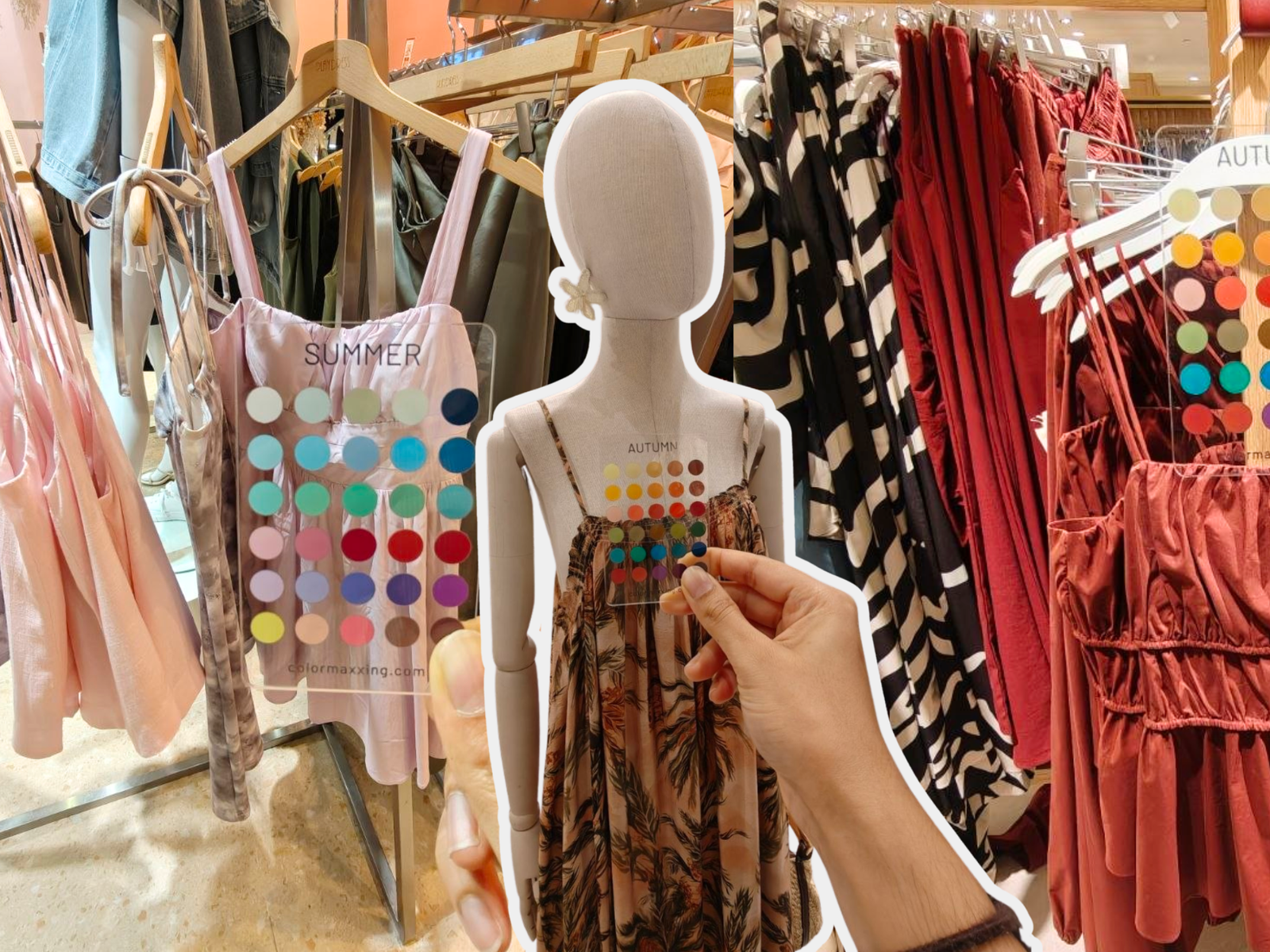
One of the more overlooked cost-saving habits is carrying a physical color reference while shopping, rather than relying on memory. The Colormaxxing Color Card is built specifically for this: a portable palette you can hold up against a potential purchase before committing to it, catching mismatches at the point of decision rather than after the return window has closed.
Key Takeaways
- Cost-per-wear, not price tag, is the more accurate measure of whether a purchase was worth it.
- Color mismatch is one of the most common, most preventable reasons a piece ends up costing more than it should.
- Knowing your season reduces mismatched purchases, returns, and trend-driven spending.
- The upfront cost of identifying your season pays off repeatedly across future shopping decisions.
Frequently Asked Questions
It varies by individual shopping habits, but the savings come primarily from fewer unworn purchases and returns, both of which compound meaningfully over a year of regular shopping.
No, cost-per-wear applies at every price point. In fact, budget shopping benefits significantly, since lower prices can make it easy to accumulate mismatched pieces without noticing the total cost.
For most people, yes, since the information applies to every future purchase rather than a single item, unlike most other shopping decisions.
It lets you check a potential purchase against your palette before buying, catching mismatches at the point of decision rather than after you’ve already paid for the item.
Where to Go From Here
For more ways to put this into practice, see our guides to How to Shop Smarter With Personal Color Analysis and How to Build a Wardrobe Using Your Personal Color Palette.
If you’d like to start making every future purchase count, our free Personal Color Analysis, powered by AI, is a fast, practical first step.