Most closets are full of clothes that seemed like a good idea at the time. A trendy color that never quite matched anything else. A “safe” neutral that somehow still doesn’t get worn. Once you know your personal color season, wardrobe building stops being guesswork, every piece you add either harmonizes with what you already own or it doesn’t, and you can tell which before you buy it.
Why Your Color Palette Should Guide Your Wardrobe
A personal color season is a specific, consistent pattern across temperature, value, chroma, and contrast, the same pattern that determines which colors harmonize with your skin, hair, and eyes. When your wardrobe is built around that pattern, pieces start working together almost automatically. A top, a bottom, and a jacket bought months apart, in completely different stores, can still coordinate effortlessly, because they all share the same underlying color logic.
Without that anchor, wardrobe building becomes trial and error. You buy what catches your eye in the moment, and only later realize it doesn’t pair with anything else you own. Knowing your season turns “does this go with anything?” from a guessing game into a quick, confident check.
The Psychology Behind a Coordinated Wardrobe
There’s a reason a color-coordinated wardrobe feels different to get dressed from than a mismatched one, and it isn’t vanity. Decision fatigue is real: the more your closet is full of pieces that don’t reliably work together, the more mental energy getting dressed actually takes, even if that effort feels invisible day to day. A wardrobe built around one consistent palette removes most of those micro-decisions before they happen. Nearly anything you grab already goes with nearly everything else, which is less about looking a specific way and more about starting each day with one less thing to figure out.
The Four Building Blocks of a Color-Based Wardrobe
- Neutrals. The foundation of the wardrobe, your bottoms, outerwear, and basics. Every season has a specific set of neutrals that work far better than generic “goes with everything” advice suggests.
- Core colors. The colors you’ll wear most often, tops, dresses, sweaters. These should make up the bulk of your non-neutral pieces.
- Accent colors. Bolder, more distinctive shades used in smaller doses, a statement piece, a bag, a pair of shoes.
- Metals. Gold, silver, or a specific finish that harmonizes with your undertone, used consistently across jewelry and hardware.
Step 1: Confirm Your Season
Everything that follows depends on this first step. If you haven’t identified your season yet, start with our guide to the 12 seasons, or get a definitive answer through our free Personal Color Analysis, powered by AI, which evaluates your full temperature, value, chroma, and contrast pattern together.
Step 2: Identify Your Neutrals
Every season has a specific neutral palette, and it’s rarely just “black, white, and grey.” A Warm Autumn’s best neutral is camel or chocolate brown, not black. A Cool Winter’s best neutral is a crisp true black, not soft ivory. Once you know your season’s neutrals, build your bottoms, coats, and basics around them first, they’ll form the backbone that everything else connects to.
Step 3: Choose Your Core Colors
Your core colors should make up the majority of your tops, dresses, and everyday pieces. These are the shades that consistently make your skin look clear and even, not the colors you think you’re “supposed” to like. Every seasonal guide on Colormaxxing lists a specific palette, pull five or six colors from your season’s guide and treat them as your default shopping list.
Step 4: Add Accent Colors Intentionally
Accent colors are where personality comes through, a bold lip, a statement bag, a single vivid piece in an otherwise quiet outfit. The key is intention: an accent color should still belong to your season’s palette, just used in a smaller, more concentrated dose rather than spread across an entire outfit.
Step 5: Choose Your Metals
Warm seasons, Spring and Autumn, generally harmonize best with gold, bronze, or warm brass. Cool seasons, Summer and Winter, generally harmonize best with silver, white gold, or platinum. Choosing one primary metal and using it consistently across jewelry, buttons, and hardware creates a subtle but noticeable sense of cohesion across an entire wardrobe.
Step 6: Audit What You Already Own
Before buying anything new, sort your existing wardrobe into three groups: pieces that clearly harmonize with your season, pieces that clearly don’t, and pieces you’re unsure about. This single exercise usually reveals why certain outfits have never quite worked, and it often uncovers pieces already in your closet that you’ve been underusing simply because you didn’t realize how well they suited you.
Step 7: Shop With a Reference, Not Memory
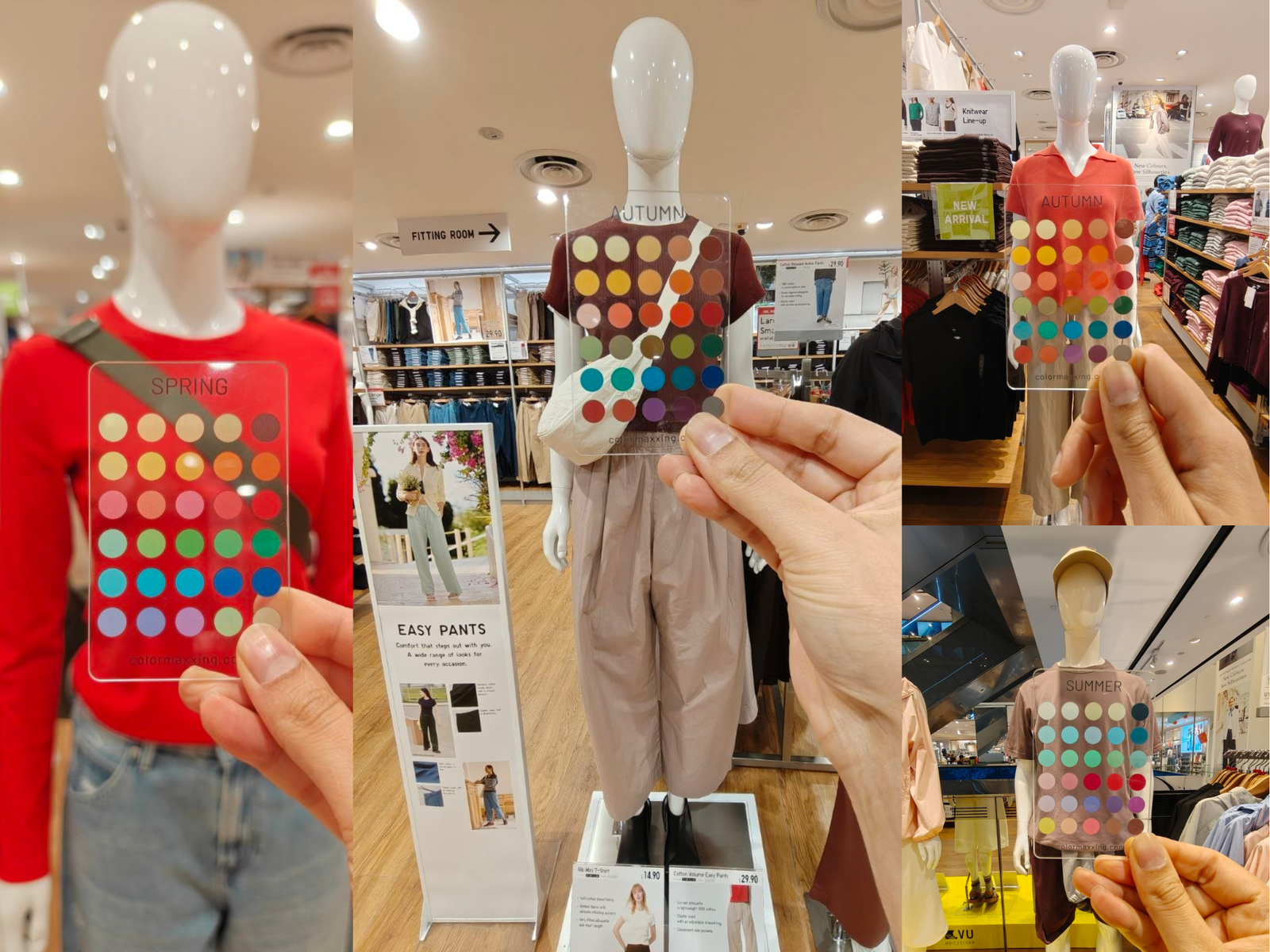
Color memory is unreliable, especially under store lighting, which is why carrying a physical reference matters. The Colormaxxing Color Card is designed exactly for this: a portable, transparent palette you can hold against a potential purchase in the fitting room, turning “I think this works” into “I can see this works.” It’s a small habit that meaningfully reduces the number of purchases that end up unworn.
How This Looks Across the Four Seasons
The core process is identical for everyone, only the palette changes. A Spring wardrobe centers on warm, clear colors and camel or ivory neutrals. A Summer wardrobe centers on cool, soft colors and dove grey or soft navy neutrals. An Autumn wardrobe centers on warm, earthy colors and chocolate brown or camel neutrals. A Winter wardrobe centers on cool, vivid colors and true black or navy neutrals.
Wardrobe Building for Different Lifestyles
The seven-step process stays the same regardless of lifestyle, but how it’s applied shifts. A professional wardrobe leans more heavily on neutrals and core colors, with accent colors reserved for smaller details like a blouse or accessories. A casual, everyday wardrobe can afford a higher ratio of core and accent colors relative to neutrals. A more creative or expressive wardrobe might use accent colors more liberally still, as long as they’re drawn from the season’s palette rather than chosen at random. In every case, the same underlying framework, neutrals first, then core, then accent, then metals, still applies.
Building a Wardrobe on a Budget
None of this requires an expensive overhaul. Because a color-based wardrobe is defined by palette rather than price point, the same principles apply whether you’re shopping at a designer boutique or a thrift store. In fact, secondhand shopping often benefits the most from this approach, since it removes the temptation to buy something just because it’s inexpensive, only pieces that genuinely fit the palette make it home. Prioritizing neutrals first also means your highest-cost, most durable purchases, coats, shoes, bags, are the pieces most likely to earn their price over years of consistent wear.
A Note on Trends
Trends will always exist, and there’s nothing wrong with enjoying them. The distinction worth making is between a trend color that also happens to suit your season, which is worth incorporating, and a trend color that doesn’t, which is worth admiring without necessarily buying. This isn’t about avoiding trends altogether, it’s about being selective enough that trend pieces still earn a place in a wardrobe that already works.
How Long Does This Actually Take?
Building a color-coordinated wardrobe isn’t a weekend project, and it doesn’t need to be. Most people find it easiest to treat it as an ongoing filter rather than an overhaul: once you know your season, every future purchase gets evaluated against it, while your existing wardrobe gets replaced gradually, piece by piece, as items naturally wear out or as you choose to upgrade them. Within a few months of shopping with this filter in place, most closets shift noticeably toward a more cohesive, intentional collection, without ever requiring a single dramatic purge.
Common Wardrobe-Building Mistakes
- Buying based on trends alone. A trending color that doesn’t suit your season will still sit unworn, no matter how popular it is.
- Treating black and white as universal. Both have a temperature, and the “wrong” version of either can undercut an otherwise well-chosen outfit.
- Mixing metals inconsistently. Jumping between gold and silver without intention can make even well-matched colors look slightly disjointed.
- Shopping without a reference. Relying on memory alone under store lighting is one of the most common reasons a “perfect match” turns out to be slightly off once you get it home.
- Trying to overhaul everything at once. A full wardrobe replacement is rarely necessary, and the pressure to do it all immediately often leads to abandoning the process altogether.
Building Toward a Capsule Wardrobe
Once your neutrals, core colors, accents, and metals are established, the natural next step is consolidating them into a smaller, more intentional rotation, a capsule wardrobe built entirely around pieces that already work together. Because every piece already shares the same undertone and intensity, a color-based capsule tends to mix and match far more successfully than a capsule built around silhouette or trend alone. Our guide to building a capsule wardrobe based on your season walks through that process in detail.
Key Takeaways
- A wardrobe built around your personal color season coordinates automatically, reducing decision fatigue and unworn purchases.
- Every wardrobe should be built in this order: neutrals first, then core colors, then accent colors, then metals.
- Auditing your existing wardrobe against your season often reveals pieces you already own but underuse.
- A physical reference, like the Colormaxxing Color Card, removes the guesswork of shopping under unreliable store lighting.
- This is a gradual filter to apply going forward, not a wardrobe you need to replace all at once.
Frequently Asked Questions
No. Start by auditing what you already own, most people find they already have several pieces that suit their season well. Replace gradually rather than all at once.
You can still wear it, personal color analysis is a guide, not a rule. But if you notice it never quite gets worn, that’s often a sign it’s working against your natural coloring rather than with it.
Neutrals first. They form the foundation everything else connects to, and they tend to get the most wear over time.
There’s no fixed number, but starting with five or six core colors from your season’s palette gives enough variety without overwhelming your closet.
Yes. Sharing a season means sharing a color palette, not a personal style. The same palette can be expressed through completely different silhouettes, price points, and aesthetics.
Where to Go From Here
This guide covers the full process, but each step has more depth available. Explore How to Shop Smarter With Personal Color Analysis, Why You Keep Buying Clothes You Never Wear, How Personal Color Analysis Saves Money, How to Create a Capsule Wardrobe Based on Your Season, and How to Choose Your Best Neutral Colors.
And if you haven’t confirmed your season yet, our free Personal Color Analysis, powered by AI, is the fastest way to start building a wardrobe that actually works together.