Shopping without knowing your colors usually means one of two things: sticking to the same “safe” pieces out of habit, or buying on impulse and hoping it works out. Personal color analysis replaces both of those approaches with something more reliable, a clear filter you can apply before you buy, not after. This is one of several practical steps covered in our guide to building a wardrobe using your personal color palette.
Why Most Shopping Decisions Fail Before You Even Leave the Store
Most unworn purchases aren’t bad decisions in the moment, they’re decisions made without the right information. Store lighting, quick mirror checks, and the pressure of a good sale all make it hard to judge a color accurately in real time. Without a clear reference point, “I think this suits me” is really just a guess, and guesses are wrong often enough to fill a closet with pieces that never get worn.
Shop With Your Season, Not Your Mood
It’s easy to be drawn to a color because of how it feels in the moment, calming, bold, nostalgic, without considering whether it actually suits you. Knowing your season gives you a second, more reliable filter to check a purchase against. The color can still appeal to you emotionally, that’s not the issue, but pairing that instinct with an objective check meaningfully cuts down on purchases you regret later.
In-Store Shopping Strategies
- Check color in natural light whenever possible. Store lighting is often warmer or cooler than daylight, which can make a color look more flattering than it actually is. Step near a window or doorway before deciding.
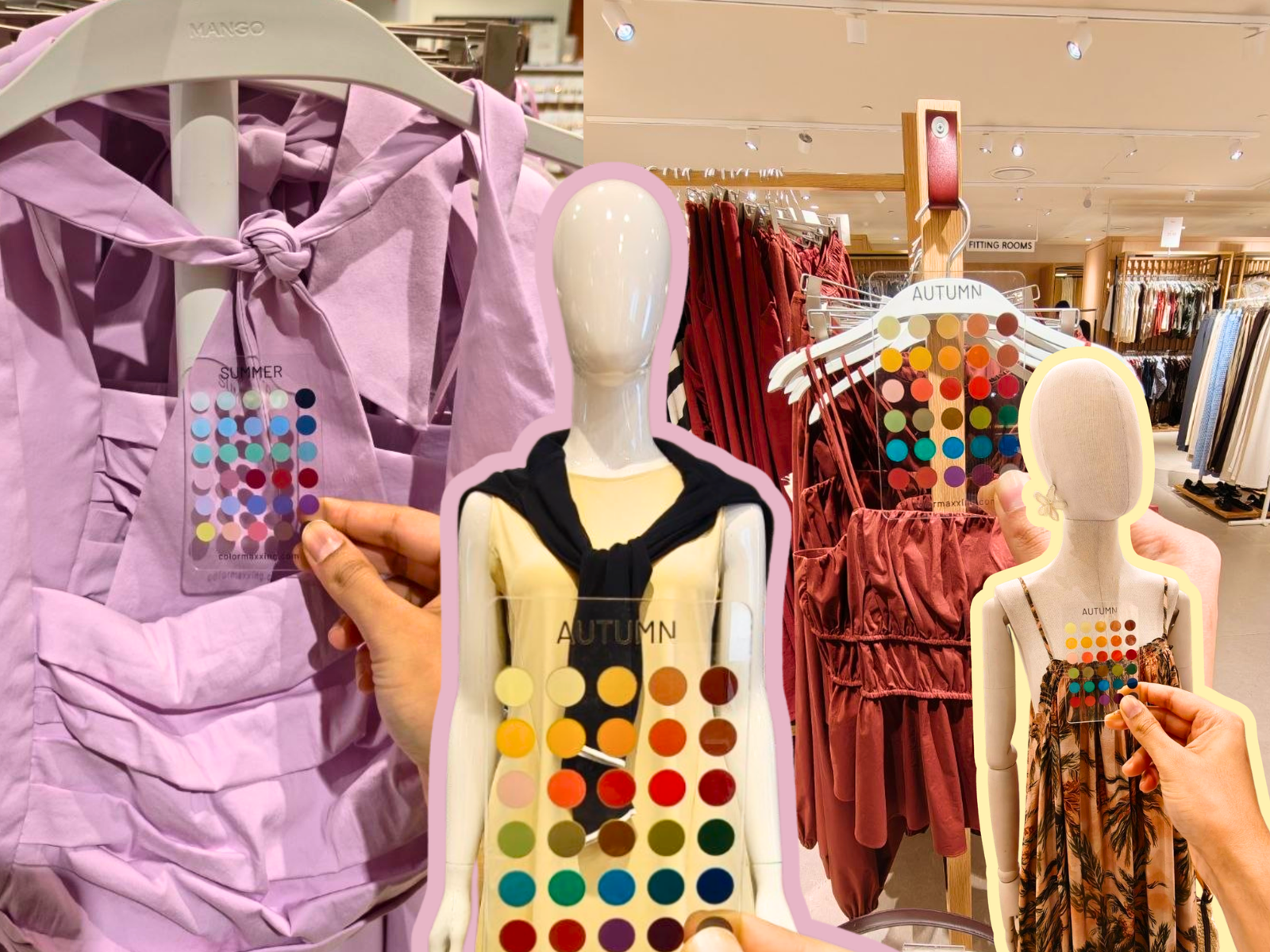
- Hold a physical reference against the item. A tool like the Colormaxxing Color Card lets you compare a potential purchase directly against your palette, right there in the fitting room, rather than relying on memory.
- Try it near your face, not just on your body. A color can look fine as a general garment and still be the wrong choice for your specific undertone once it’s framing your face.
- Give yourself a pause before deciding. If a piece still feels right after a short break away from it, that’s a stronger signal than an in-the-moment reaction.
Online Shopping Strategies
- Don’t trust product photos alone. Lighting and screen calibration can shift a color noticeably, cross-check with customer photos when available.
- Keep a running list of your season’s core colors. Having your palette on hand while browsing makes it much faster to filter search results before you even click into a product.
- Read return policies before buying color-critical pieces. Since online color can be unpredictable, an easy return option makes experimenting with new pieces lower-risk.
Secondhand and Thrift Shopping
Secondhand shopping benefits enormously from knowing your palette, since it removes the temptation to buy something purely because it’s inexpensive. A low price tag doesn’t make an off-season color a better purchase, it just makes an unworn piece a cheaper one. Approaching thrift and secondhand shopping with your palette already in mind turns it into one of the most efficient ways to build a wardrobe, since you’re filtering for fit and quality on top of a color you already know works.
A Quick Pre-Purchase Checklist
- Does this color fall within my season’s core, accent, or neutral palette?
- Have I checked it in natural light, not just store or screen lighting?
- Does it genuinely make my skin look more even, not just “fine”?
- Will it realistically pair with at least two or three things I already own?
- Am I choosing this because it suits me, or because it’s on sale?
Common Shopping Mistakes
- Buying because of a sale, not a fit. A discount doesn’t change whether a color suits you, it only changes the cost of finding out it doesn’t.
- Relying on how a color looks on a model or mannequin. Someone else’s coloring is not your coloring, a color that looks great on a model can look completely different on you.
- Skipping the natural-light check. This single step catches more mismatched purchases than almost anything else on this list.
Key Takeaways
- Most unworn purchases come from unreliable in-the-moment judgment, not bad taste.
- Checking colors in natural light and against a physical reference meaningfully improves shopping accuracy.
- The same principles apply whether you’re shopping in-store, online, or secondhand.
- A quick pre-purchase checklist can catch mismatches before they become regrets.
Frequently Asked Questions
Look at customer review photos when available, since they’re more likely to be taken in everyday lighting than professional product photography.
Yes, a portable reference like the Colormaxxing Color Card removes the guesswork of relying on memory, especially under unpredictable store lighting.
Not necessarily, but treating your season as the default rather than the exception tends to noticeably reduce unworn purchases over time.
Often, yes, but that’s a side effect rather than the goal. Fewer purchases end up unworn or returned, which naturally reduces overall shopping volume.
Where to Go From Here
For the full wardrobe-building framework this fits into, see our guide to How to Build a Wardrobe Using Your Personal Color Palette. You may also find How Personal Color Analysis Saves Money useful for understanding the financial side of shopping smarter.
And if you haven’t confirmed your season yet, our free Personal Color Analysis, powered by AI, is the fastest way to start shopping with confidence instead of guesswork.