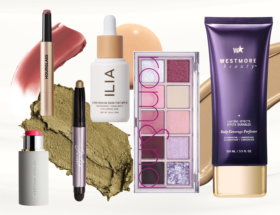
Blush sits directly on the cheek, close enough to your natural flush that the wrong undertone can look like a rash instead of a glow. The same season that guides your lipstick choices also determines which blush tones read as healthy color rather than an obvious layer of makeup.
Why Blush Undertone Is So Easy to Get Wrong
Unlike lipstick or eyeshadow, blush is meant to mimic something your skin already does naturally, a warm flush or a cool flush. When the blush undertone doesn’t match your own, it stops looking like your skin doing something and starts looking like a product sitting on top of it.
Blush Shades by Season
| Season | Best Blush Undertone | Shades to Use Sparingly |
|---|---|---|
| Spring | Warm, clear coral or peach | Cool mauve, deep plum |
| Summer | Cool, soft rose or dusty pink | Bright orange-coral |
| Autumn | Warm, muted terracotta or apricot | Icy pink, cool mauve |
| Winter | Cool, clear pink or berry | Peachy or golden-toned blush |
Matching Blush Intensity to Your Season
Beyond undertone, how much pigment you apply should scale with your season’s natural contrast. Light seasons (Light Spring, Light Summer) look most natural with a soft, barely-there flush, while deep and bright seasons (Deep Winter, Bright Spring) can wear a more visible, saturated blush without it looking heavy-handed.
How to Test Blush Against Your Skin
Pinch your cheek gently and look at the color your skin turns naturally, this is a rough preview of your own undertone. Then hold a warm-toned and a cool-toned blush swatch near that spot in natural light and see which one matches more closely rather than sitting on top of it.
Cream vs. Powder Blush by Season
- Cream blush — blends more seamlessly into skin and tends to suit softer, more muted seasons (Soft Summer, Soft Autumn) especially well.
- Powder blush — offers more precise, buildable color and works well for seasons that want a clearer, more defined flush (Bright Spring, Bright Winter).
Common Mistakes
- Matching blush to lipstick instead of skin. They should harmonize, but blush answers to your undertone first.
- Applying too much for your season’s contrast level. A heavy blush on a naturally soft, light complexion can look more like a costume than a flush.
- Ignoring how blush oxidizes. Some formulas shift warmer over several hours, worth checking before committing to a shade for all-day wear.
Key Takeaways
- Blush should mimic your skin’s natural flush, so undertone match matters more here than in almost any other makeup category.
- Warm seasons (Spring, Autumn) suit coral and terracotta tones; cool seasons (Summer, Winter) suit rose and berry tones.
- Intensity should scale with your season’s contrast, soft for light seasons, more saturated for deep or bright ones.
Frequently Asked Questions
Your personal color season doesn’t change with the calendar, it’s based on your skin, hair, and eyes, so your ideal blush undertone stays consistent year-round.
That can happen, since a natural flush reflects blood flow near the surface of the skin, while your color season reflects your overall pigment pattern. When in doubt, follow your season.
No. Bronzer adds warmth and dimension all over the face, while blush adds a targeted flush to the cheeks. Bronzer undertone matters too, but the rules differ slightly from blush.
Yes, the same undertone logic applies regardless of formula, cream, powder, or liquid. Formula affects finish and blendability, not which undertone flatters you.
Where to Go From Here
For the full picture of makeup by season, see Personal Color Analysis for Makeup Explained. And for eye makeup, see our guide to Choosing Eyeshadow Colors Based on Your Season.
Not sure of your season yet? Our free Personal Color Analysis, powered by AI, identifies your exact palette, blush included, in about a minute.