Before knowing your personal color season, shopping decisions rely on a handful of common but unreliable habits, ones so normalized that most people don’t realize they’re working against them. None of these are personal failings, they’re simply what shopping looks like without a clear color reference to check against.
Mistake 1: Trusting “Universal” Color Advice
Advice like “black and white go with everything” or “everyone looks good in navy” treats color as one-size-fits-all, when in reality even neutrals have a warm or cool undertone. Following universal advice means missing the version of a neutral that actually suits you, and picking up the version that doesn’t.
Mistake 2: Judging Color on the Hanger
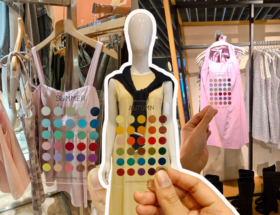
A color can look completely different in your hand than it does against your face. Skin, hair, and eye color all interact with a garment’s color the moment it’s worn, an effect that’s impossible to judge while a piece is still on a hanger or a mannequin.
Mistake 3: Shopping Under Store Lighting
Store lighting is frequently warmer or cooler than natural daylight, which can flatter a color temporarily without reflecting how it’ll actually look outside. A color that seems perfect under warm store bulbs can look noticeably different once you step outside.
Mistake 4: Buying Based on Trends Alone
A trending color is popular because it works for enough people to gain visibility, not because it works for everyone. Buying a trend color without checking it against your own coloring is one of the most common ways a “of-the-moment” purchase ends up unworn within a season.
Mistake 5: Ignoring Undertone Entirely
Undertone is often the single biggest factor in whether a color harmonizes with your coloring, yet it’s also the easiest to overlook. Two colors can be nearly identical in every way except undertone and produce completely different results once worn, our guide to why undertone isn’t the whole story covers this in more depth.
Mistake 6: Copying Someone Else’s Palette
A color that looks striking on a friend, influencer, or celebrity reflects their coloring, not yours. Even two people with similar skin tones can belong to entirely different seasons once hair, eyes, and contrast are factored in.
Mistake 7: Letting a Sale Make the Decision
A discount changes the price of a mismatched color, not whether it suits you. Sale pricing can make it easy to justify a purchase that would otherwise get a second thought, which is exactly when a quick color check matters most.
How These Mistakes Compound Over Time
None of these mistakes are dramatic on their own, but they tend to stack. A trend color, bought on sale, judged on the hanger, under store lighting, without checking undertone, has several chances to be a mismatch and only one chance to be a genuine fit. Over months and years of shopping this way, a wardrobe can fill up with pieces that individually made sense in the moment but collectively don’t work well together.
Key Takeaways
- Most shopping mistakes come from unreliable moment-to-moment judgment, not poor taste.
- Universal color advice (“black and white go with everything”) ignores undertone, which affects everyone differently.
- Store lighting and hanger judgment are two of the most common reasons a color looks different once you get it home.
- Checking color against your own coloring, not a trend or someone else’s palette, is the fastest fix for all of these.
Frequently Asked Questions
Judging color on the hanger or under store lighting is likely the most universal, since it’s built into how most physical shopping happens by default.
Yes, trends that also happen to fall within your palette are worth incorporating, the issue is following trends without checking that overlap first.
It’s one of four dimensions, alongside value, chroma, and contrast, but it’s often the most immediately noticeable one, which is why it gets overlooked so easily.
Most people notice a difference quickly once they have a clear palette to check against, since it replaces guesswork with a concrete comparison.
Where to Go From Here
For practical strategies to shop more effectively, see our guide to How to Shop Smarter With Personal Color Analysis. And if unworn purchases are a recurring pattern for you, Why You Keep Buying Clothes You Never Wear explores that specific issue further.
If you’d like to start shopping with a clear reference instead of guesswork, our free Personal Color Analysis, powered by AI, identifies your season in minutes.