White seems like the simplest color in any wardrobe, until you put two different whites side by side and notice one looks crisp and the other looks slightly dingy on the very same person. White isn’t one color, it’s a whole family of shades that range from stark and blue-based to soft and cream-based, and which one flatters you depends entirely on your personal color season.
Why “Just Wear White” Isn’t Quite Right
Like every other neutral, white has an underlying temperature. A true white leans cool, with a slight blue undertone. An ivory or soft white leans warm, with a slight yellow or cream undertone. The difference is subtle in isolation, but next to skin it becomes obvious: the wrong white can make even flawless skin look slightly grey or tired, while the right white makes the whole face look brighter and more awake.
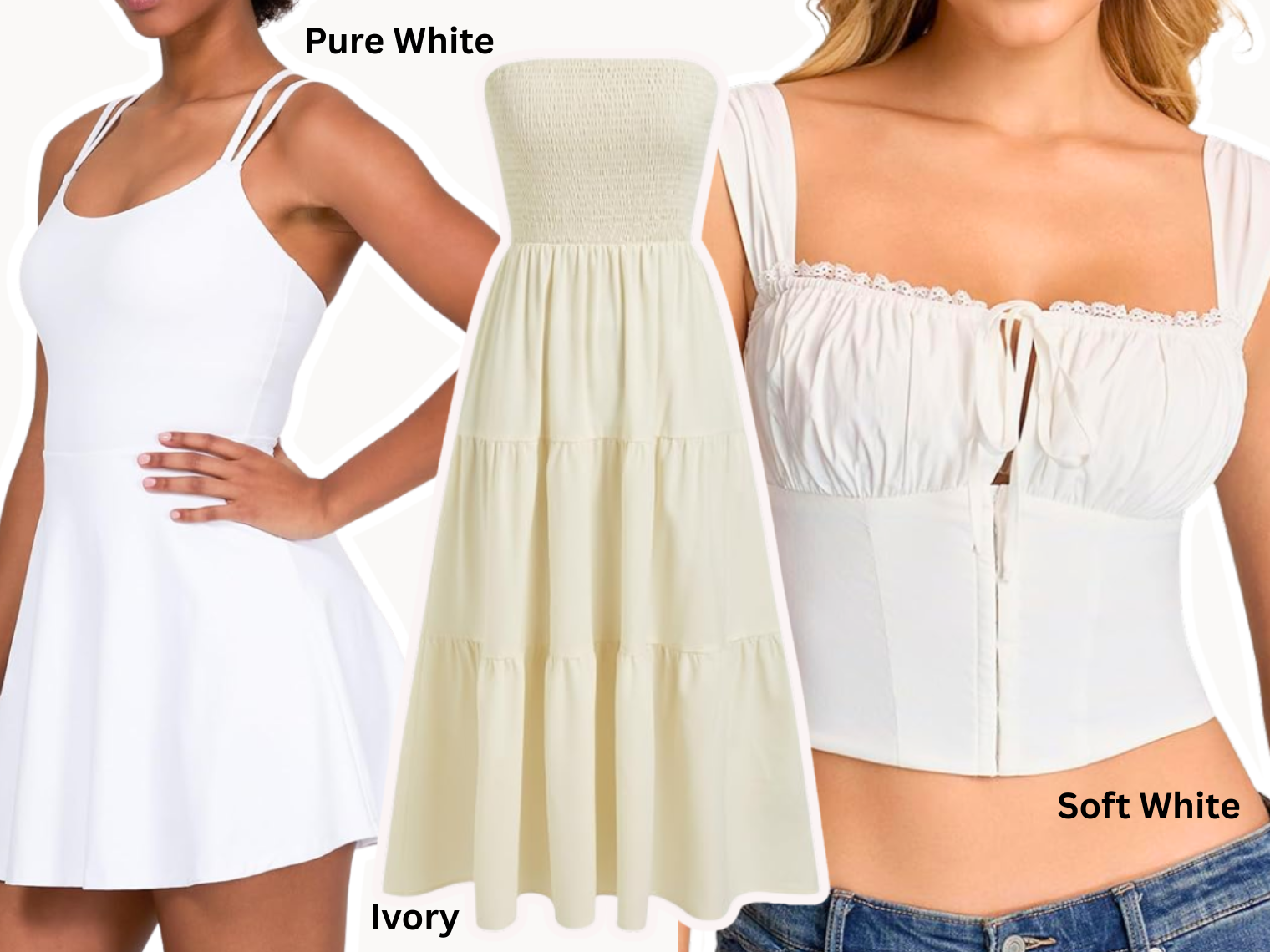
The Three Main Types of White
- True white — crisp, cool, slightly blue-based. Works best on cool, high-contrast seasons.
- Soft white — a gentle in-between white, neither strongly warm nor cool. Works well on lighter, softer seasons.
- Ivory / warm white — creamy, yellow-based. Works best on warm seasons, especially those with golden undertones.
Best White by Season
| Season | Best White | White to Use Sparingly |
|---|---|---|
| Spring | Soft white, light ivory | Stark true white |
| Summer | Soft white, cool white | Ivory, cream |
| Autumn | Warm ivory, cream | True white, stark white |
| Winter | Pure true white | Ivory, cream |
These are starting points. Within each season, sub-seasons shift the exact shade slightly, a Bright Winter wears true white more comfortably than a Deep Winter might, and a Light Spring often prefers an even softer, lighter ivory than a Warm Spring does.
How to Test White Against Your Skin
Hold two whites, a stark true white and a soft ivory, near your face in natural light. Watch which one makes your skin look more even and awake, and which one makes it look slightly duller or grey by comparison. This is the same comparison method that works for identifying your best version of any neutral, and it’s often the fastest way to notice a real difference, since white offers so little else to distract the eye.
Where White Shows Up Most
- Button-downs and blouses — worn close to the face, so getting the right white matters most here.
- Denim and casual basics — slightly more forgiving, since it’s rarely worn directly against the neck and jaw.
- Bridal and occasion wear — worth testing carefully in advance, since photos amplify any mismatch between white and undertone.
Common Mistakes
- Assuming all white is interchangeable. A shirt that looked great in one white can look noticeably different in another, even from the same brand.
- Buying white under store lighting. Warm store bulbs can make a stark white look softer than it actually is, always double-check in natural light before deciding.
- Overlooking ivory as “off-white” rather than a real option. For warm seasons, ivory is often the better-performing choice, not a compromise.
Key Takeaways
- White has a temperature just like any other color, ranging from cool true white to warm ivory.
- Each personal color season has a best-fit white, along with versions worth using more sparingly.
- Comparing two whites side by side in natural light is the fastest way to see which one suits you.
- White worn close to the face (shirts, blouses) benefits most from getting this right.
Frequently Asked Questions
Not really. Even a “universally flattering” white will still perform better on some seasons than others, the difference is just less dramatic than with more saturated colors.
In small doses or further from the face, yes. For larger pieces or anything worn close to your skin, a soft or warm white will generally look more harmonious.
Photography lighting can shift how a white reads, which is why it’s worth testing your dress or formalwear white against your skin in natural daylight before the big day, not just under store or studio lighting.
Yes. Cream, eggshell, and bone all sit somewhere on the same warm-to-cool white spectrum, and the same comparison method works for finding your best version of any of them.
Where to Go From Here
For the full picture of how to choose neutrals beyond just white, see our guide to How to Choose Your Best Neutral Colors. And for the broader wardrobe-building framework this fits into, see How to Build a Wardrobe Using Your Personal Color Palette.
If you haven’t confirmed your season yet, our free Personal Color Analysis, powered by AI, identifies your exact palette, whites included, in minutes.