
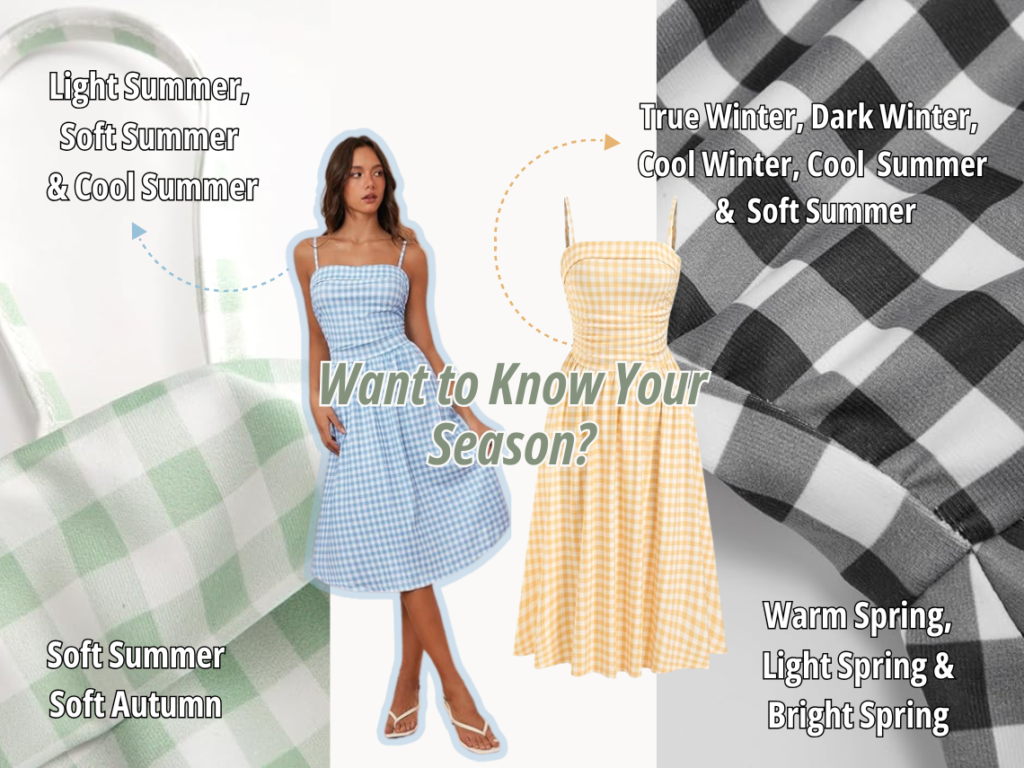
The 12 seasons are the more specific version of the four broad color families (Spring, Summer, Autumn, Winter), created by splitting each one into three subtypes based on how light, deep, soft, or clear a person’s coloring is. Spring splits into Light, Warm, and Bright Spring. Summer splits into Light, Cool, and Soft Summer. Autumn splits into Soft, Warm, and Deep Autumn. Winter splits into Deep, Cool, and Bright Winter. Together, these twelve give a much more precise picture than the four families alone.
From Four Families to Twelve Addresses
If you’ve read about the four seasons of personal color analysis, you already know the broad strokes: Spring is warm and clear, Summer is cool and soft, Autumn is warm and rich, Winter is cool and high-contrast.
The problem with stopping there is that “warm and clear” still describes a lot of very different-looking people. A warm, light, delicately clear person and a warm, deep, vividly clear person are both technically “warm and clear,” but they’ll look completely different in the same shade of coral. The twelve-season system exists to close that gap.
Each of the four families splits into three subtypes, and each subtype borrows one additional characteristic from a neighboring season: a touch of lightness, a touch of depth, or a touch of extra clarity or softness. That borrowed quality is what the subtype’s name usually signals.
The Twelve Seasons, Organized by Family
Spring Family: Warm and Clear
- Light Spring leans into Spring’s warmth but takes on extra lightness, similar to Summer’s delicacy without losing Spring’s warmth. Coloring tends to read as warm, light, and fresh.
- Warm Spring is the most classically warm version of Spring: golden, clear, and unmistakably sun-kissed. This is the version people usually picture first when they hear the word “Spring.”
- Bright Spring keeps Spring’s warmth but borrows extra clarity and contrast from Winter, making it the most vivid and high-energy of the three.
Summer Family: Cool and Soft
- Light Summer leans into Summer’s softness but takes on extra lightness, similar to Spring’s delicacy without losing Summer’s coolness. Coloring tends to read as cool, light, and gentle.
- Cool Summer is the most classically cool version of Summer: balanced, refined, and clearly blue-toned rather than warm.
- Soft Summer keeps Summer’s coolness but leans further into muted, blended softness, borrowing a quiet, gentle quality that echoes Autumn’s softness without its warmth.
Autumn Family: Warm and Rich
- Soft Autumn leans into Autumn’s warmth but takes on extra softness, similar to Summer’s gentle muted quality without losing Autumn’s warmth. Coloring tends to read as warm, muted, and gentle rather than vivid.
- Warm Autumn is the most classically warm version of Autumn: golden, earthy, and rich, the version people usually picture first when they hear the word “Autumn.”
- Deep Autumn keeps Autumn’s warmth but borrows extra depth and intensity from Winter, making it the richest and most dramatic of the three.
Winter Family: Cool and High-Contrast
- Deep Winter leans into Winter’s coolness but takes on extra depth, similar to Autumn’s richness without losing Winter’s coolness. Coloring tends to read as cool, deep, and dramatic.
- Cool Winter is the most classically cool version of Winter: clear, elegant, and unmistakably blue-toned.
- Bright Winter keeps Winter’s coolness but borrows extra clarity and saturation, making it the most vivid and high-contrast of the three, often the mirror image of Bright Spring in coolness rather than warmth.
Why the System Is Organized This Way
Notice a pattern: within every family, one subtype leans toward lightness, one stays closest to the “classic” version of that season, and one leans toward either depth or extra brightness. That’s not a coincidence. It reflects the twelve-subtype expansion of the original seasonal framework, built on the same four dimensions, temperature, value, chroma, and contrast, simply expressed with more precision than the four broad families allow.
This is also why certain subtypes across different families can look surprisingly similar at first glance. Light Spring and Light Summer share a delicate lightness despite one being warm and the other cool. Bright Spring and Bright Winter share high-energy clarity despite being on opposite temperature ends. Recognizing which dimension you’re responding to, warmth versus lightness versus clarity, is often what finally makes a confusing comparison click into place.
How to Start Narrowing Down Your Twelve
You don’t need to identify your exact subtype from a single article, but there’s a useful order to work through:
- Start with temperature. Warm points you toward Spring or Autumn. Cool points you toward Summer or Winter. This alone cuts the field from twelve to six.
- Then consider overall depth. Do you read as lighter and more delicate, or deeper and more dramatic, compared to others who share your temperature? This starts separating, for example, Light Spring from Bright Spring.
- Then consider clarity. Does your coloring look more vivid and clearly defined, or softer and more blended? This is usually the final piece that distinguishes something like Warm Autumn from Soft Autumn.
Each of the four seasonal families has its own dedicated guide covering this in far more depth, including how to tell its three subtypes apart with concrete examples.
Common Mistakes When Exploring the 12 Seasons
- Trying to skip straight to a subtype. Working through temperature, then depth, then clarity tends to produce a more confident answer than guessing a specific subtype cold.
- Assuming your subtype won’t change how you already shop. Most people find a meaningful portion of their existing wardrobe already fits their subtype; this is refinement, not a restart.
- Comparing yourself only to one celebrity or influencer example. Two people in the same subtype can still look quite different from each other. The four dimensions matter more than resembling a specific public figure.
- Assuming the twelve seasons are rigid boxes. Colormaxxing treats these as descriptive directions, not strict categories. Some people sit close to a boundary between two subtypes, and that’s a completely normal, well-documented outcome called a color crossover.
Key Takeaways
- The 12 seasons come from splitting each of the 4 broad seasons into 3 subtypes based on lightness, depth, and clarity.
- Every family follows the same pattern: one lighter subtype, one classic subtype, and one deeper or brighter subtype.
- Working through temperature, then depth, then clarity is a more reliable path to your subtype than guessing directly.
- Subtypes across different families can look similar if they share a dimension (like lightness) even when their temperature differs.
Frequently Asked Questions
No single article replaces a full analysis, but understanding temperature, depth, and clarity gives you a genuinely useful starting direction before you go further.
This is common enough to have its own name: a seasonal color crossover. It generally means your coloring sits close to the boundary between two neighboring subtypes rather than firmly inside one.
Korean personal color analysis and Western seasonal analysis both use temperature, depth, and clarity as core concepts, though Korean analysis places extra emphasis on facial harmony and everyday beauty application. Our guide to Korean Personal Color Analysis Explained covers this in more depth.
All twelve appear across every population. None is rarer or more desirable than another; each simply describes a different, equally valid combination of temperature, depth, and clarity.
Where to Go From Here
From here, the most useful next step is exploring the specific family you suspect you belong to. Each seasonal family has its own complete guide covering colors, makeup, and style in depth: Spring, Summer, Autumn, and Winter.
And if you’d rather have your subtype identified directly, our free Personal Color Analysis, powered by AI, evaluates all four dimensions at once and points you to one of the twelve.