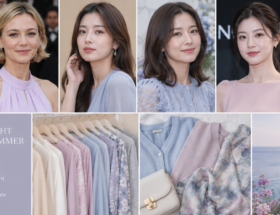
Spring is one of the four main seasons in the 12-season personal color system, built around warm, clear, and light-to-medium coloring. If your natural coloring leans warm and reads as fresh and bright rather than deep or muted, Spring is likely your general direction, and this guide covers the colors, neutrals, makeup, and hair tones that tend to create the most harmony for it.
Seasonal color analysis has been used as a style framework for decades, and Spring is one of its four foundational categories, alongside Summer, Autumn, and Winter. Rather than a passing trend, it draws on the same warm-cool, light-deep, and clear-muted logic that runs throughout color harmony theory more broadly.
What Makes Spring Coloring Distinct
Every season is defined by the same four qualities: temperature, value, chroma, and contrast. Spring’s specific combination is what sets it apart from the other three:
- Temperature: Warm. Spring coloring carries golden, peachy, or warm undertones.
- Value: Light to medium. Spring coloring generally reads lighter rather than deep.
- Chroma: Clear. Spring coloring has a fresh, bright quality rather than a muted or dusty one.
- Contrast: Usually medium. Features tend to have a noticeable but not extreme difference in depth.
Put together, Spring colors tend to feel energetic, youthful, and sunlit, connecting to the actual season’s light: fresh growth, warm early sun, and clear skies.
Why These Colors Work for Spring
None of this is arbitrary. A color creates harmony when it shares enough of your own temperature, value, and chroma that it blends with your features rather than competing with them. Spring coloring is warm, light-to-medium, and clear, so colors that share those same three qualities tend to make skin look more even and eyes look brighter, while colors that oppose them, cool, deep, or muted, can create more contrast than feels balanced, sometimes reading as slightly harsh or aging against Spring’s naturally fresh coloring.
This is also why a color recommendation is never really about the color in isolation. A muted sage green and a fresh, clear green share a hue family but sit in completely different places for Spring, one supports the season’s natural clarity, the other works against it.
The Spring Color Palette
Spring’s best colors share that same warm, clear, light-to-medium quality, rooted in the same color theory principles that explain why certain hues read as fresh rather than heavy.
- Peach — warm and light, one of the most universally flattering Spring shades.
- Coral — clear and energetic, works beautifully in both clothing and makeup.
- Warm pink — soft without being cool or dusty.
- Fresh green — clear and grassy rather than deep forest or muted sage.
- Clear turquoise — bright and warm-leaning rather than icy.
- Golden yellow — warm and vivid, a signature Spring shade.
Spring’s Best Neutrals
Neutrals matter as much as statement colors, since they form the backbone of a wardrobe. For Spring, that means warmer, lighter neutrals rather than stark or cool ones:
- Ivory (rather than a stark, blue-based white)
- Warm beige
- Camel
- Light navy (rather than a deep, cool black)
A stark black or icy white can feel heavier or cooler than Spring coloring calls for. Ivory and light navy tend to do the same job, anchoring an outfit, while staying in harmony with Spring’s warmth and lightness.
The Three Spring Sub-Seasons
Within the broader Spring family, three more specific sub-seasons capture individual variation:
- Light Spring — warm, light, and fresh, the lightest of the three, often paired with fair, delicate coloring.
- Warm Spring — warm, clear, and golden, the most temperature-forward of the three, with a strong golden quality.
- Bright Spring — warm, high clarity, and higher contrast, the most vivid of the three, able to carry the boldest colors in the Spring palette.
All three share Spring’s core warmth and clarity. What separates them is exactly how light, how golden, or how vivid that warmth reads on you, the same kind of value-and-chroma distinction covered in our guide to value and chroma.
Spring Compared to the Other Three Seasons
Seeing Spring next to the other three main seasons often makes it easier to recognize by contrast:
- Spring vs Summer. Both can read as light, but Spring is warm and clear while Summer is cool and soft. A clear coral (Spring) versus a dusty rose (Summer) shows the difference clearly.
- Spring vs Autumn. Both are warm, but Spring is light and clear while Autumn is deep and rich or muted. A fresh golden yellow (Spring) versus a deep mustard (Autumn) shows the same warmth at very different depths.
- Spring vs Winter. These sit at nearly opposite ends of the spectrum, Spring warm and light, Winter cool and typically deep or high-contrast, making them the easiest pair to tell apart.
How to Know If You’re a Spring
A few common signals point toward Spring: warm, golden, or peachy undertones; hair in the golden-blonde-to-light-golden-brown range; eyes that are often clear blue, green, or light warm brown; and an overall impression that reads as fresh and light rather than deep or richly saturated.
If you’re warm but your coloring reads deep and rich rather than light and clear, Autumn, not Spring, is likely the closer fit, our guide to warm skin and season myths explains that distinction in more depth.
A simple test: hold a soft, dusty pastel and a clear, bright pastel of a similar hue near your face in natural light. If the clear version consistently looks more alive and the muted version looks slightly flat by comparison, that’s a meaningful signal toward Spring rather than a cooler or more muted season.
Spring Makeup Direction
Makeup follows the same warm, clear, light-to-medium logic as clothing:
- Foundation and base: warm, golden-toned formulas rather than pink or neutral-cool ones.
- Blush: peach or coral tones read as natural and fresh rather than a cool-toned pink.
- Lips: warm pink, coral, or peachy nude shades tend to harmonize best.
- Eyes: warm golds, peachy browns, and soft warm greens complement Spring’s natural coloring more than cool-toned greys or blue-based shadows.
For nail polish, warm corals, peachy nudes, and clear warm pinks tend to extend the same harmony down to the hands, while stark, icy, or deep vampy shades can feel disconnected from Spring’s naturally light, warm coloring.
Spring Hair Direction
Hair color follows the same warmth. Golden browns, warm honey tones, and golden or strawberry-blonde highlights tend to harmonize with Spring coloring. Very cool, ashy, or extremely dark tones can create more contrast with Spring’s naturally light, warm coloring than feels balanced.
How to Build a Spring Wardrobe
- Start with neutrals. Ivory, camel, and light navy pieces build a base that already harmonizes with your coloring, making everything layered on top easier to coordinate.
- Add one or two statement colors at a time. Coral or golden yellow in a top, bag, or scarf is an easy way to test the palette before committing to a full outfit.
- Use warm metals. Gold and rose gold jewelry tend to echo Spring’s warmth more naturally than silver or white gold.
- Favor lighter fabric weights and finishes where possible, since they tend to support Spring’s naturally light, fresh quality better than very heavy, matte, or deeply textured fabrics.
- Denim and casual basics. A warm, medium-wash denim tends to sit more naturally with Spring coloring than a stark, dark indigo or a cool grey-wash.
- Outerwear. Camel, warm rust, or soft coral coats extend the palette into layering pieces, which are often worn closest to the face and have an outsized effect on overall harmony.
- Occasion wear. For dresses and eveningwear, a clear coral, warm golden yellow, or fresh green tends to photograph and read more harmoniously than a deep jewel tone or stark black.
Applying Spring Across Different Settings
At work, Spring’s palette can still feel professional without abandoning warmth. Ivory blouses, camel blazers, and warm navy trousers create a polished base, with a coral or golden accessory adding personality without overwhelming a formal setting.
For everyday wear, fresh greens, warm pinks, and clear turquoise work well in casual separates, especially in lighter fabrics like cotton and linen that echo Spring’s naturally light quality.
For special occasions, a clear, warm color in a flattering value tends to outperform a “safe” black, since Spring coloring is often enhanced rather than diminished by a bit of brightness. A coral or golden-yellow dress will frequently read as more flattering in photos than a deep, cool-toned alternative.
Common Spring Shopping Mistakes
- Reaching for stark black as a default neutral. It tends to overwhelm Spring’s natural lightness, ivory or light navy usually does the job with more harmony.
- Choosing dusty or muted versions of Spring colors. Spring is defined by clarity, a muted coral or a dusty peach shifts toward a different season’s territory.
- Assuming “warm” alone is enough information. Warm Autumn is also warm but deeper and more muted, matching depth and clarity matters as much as matching temperature.
A Quick Spring Shopping Checklist
If you’re starting from scratch, these five categories tend to give the fastest, most noticeable return:
- One warm neutral top or blouse in ivory or camel
- One clear, warm accent color, coral or golden yellow works well, in a top or accessory
- Gold or rose-gold jewelry to replace silver-toned pieces where possible
- A warm-toned lipstick or blush to test the makeup direction before a full routine change
- One light navy or camel outer layer, since outerwear sits close to the face and has an outsized visual effect
Key Takeaways
- Spring coloring is warm, light to medium in value, clear in chroma, and usually medium in contrast.
- Best colors include peach, coral, warm pink, fresh green, clear turquoise, and golden yellow, with ivory, warm beige, camel, and light navy as neutrals.
- Light Spring, Warm Spring, and Bright Spring each share Spring’s core warmth and clarity but differ in lightness, goldenness, and vividness.
- Makeup and hair should follow the same warm, clear, light-to-medium direction as clothing for the most consistent harmony.
Frequently Asked Questions
Black can be a challenging match for Spring’s natural lightness and warmth. A lighter, warmer alternative like ivory or light navy often creates a more balanced effect, especially close to the face.
Value and chroma. Spring reads light and clear; Autumn reads deep and rich or muted. Both are warm, but they sit at very different points on the lightness and clarity spectrum.
Compare how light, how golden, and how vivid your coloring reads. The lightest, most delicate coloring points to Light Spring; the most golden and clear points to Warm Spring; the most vivid and high-contrast points to Bright Spring.
Only clear, warm pastels. A soft, dusty, or cool-toned pastel can actually suit a different season better, since Spring pastels still need to carry warmth and clarity, not just lightness.
Generally, deep jewel tones suit Winter and Autumn more than Spring. If a jewel tone appeals to you, look for a clearer, warmer, slightly lighter version of it rather than the deepest, most saturated version.
No. Personal color seasons are named after the four calendar seasons for their qualities, warmth, lightness, richness, coolness, not tied to what time of year it currently is. A Spring season looks the same in December as it does in April.
Where to Go From Here
This guide covers Spring as a whole family. If you’d like to go deeper into exactly which of the three Spring sub-seasons fits you, our upcoming Light Spring, Warm Spring, and Bright Spring guides break each one down in full detail.
And if you’d like direct confirmation of your season rather than working it out from descriptions alone, our free Personal Color Analysis, powered by AI, identifies your specific temperature, value, chroma, and contrast pattern in minutes.