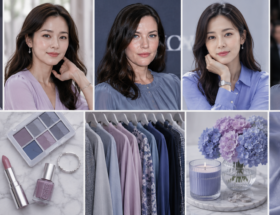
Summer is one of the four personal color seasons in the 12-season system, and it is defined by a simple combination: cool undertones paired with soft, muted color intensity. If your coloring reads as cool but gentle rather than icy or dramatic, Summer is likely your season, and this guide covers the full family, including its three sub-seasons: Light Summer, Cool Summer, and Soft Summer.
What Makes Summer Distinct
Every season is defined by a pattern across the four dimensions of temperature, value, chroma, and contrast. Summer’s pattern is consistent across all three of its sub-seasons in two of those dimensions, and varies in the other two.
- Temperature: Cool. Every Summer sub-season carries a cool undertone, this is Summer’s one constant.
- Value: Light to medium, generally lighter overall than Autumn or Winter.
- Chroma: Soft to muted. Summer is one of the two softest seasons in the entire system, alongside Soft Autumn.
- Contrast: Low to medium, gentle and blended rather than sharply defined.
The Summer Color Palette
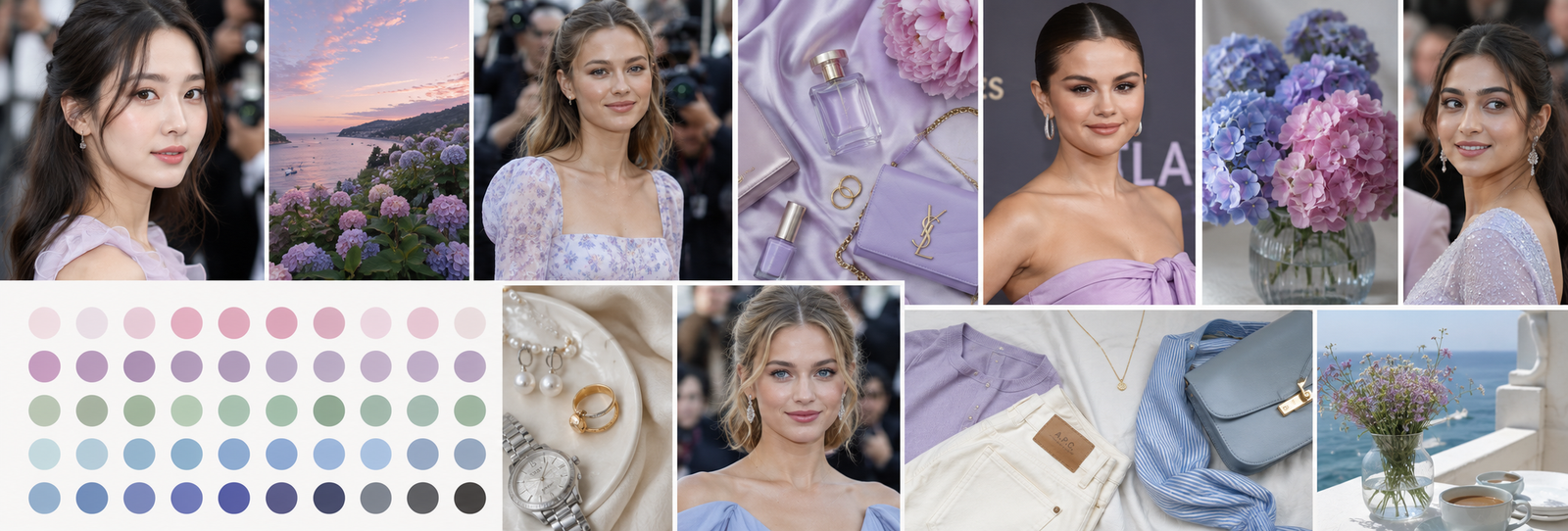
Summer colors share a cool, softened quality, as though a touch of grey or blue has been blended into every hue. None of them are stark or saturated.
- Powder blue
- Soft lavender
- Dusty rose
- Cool blue-red (not orange-based)
- Muted teal
- Soft mauve
- Cool sage green
Summer Neutrals
Summer neutrals lean cool and soft rather than stark or warm:
- Soft white (not bright white, not ivory)
- Cool taupe
- Dove grey
- Soft navy (rather than jet black)
Why These Colors Work for Summer
Personal color analysis works by matching the intensity and undertone of what you wear to the intensity and undertone already present in your skin, hair, and eyes. Summer coloring is inherently soft and cool, so colors with that same gentle, blue-based quality tend to blend with your natural coloring rather than compete with it. A saturated, warm color like rust or mustard can sit visually apart from Summer skin in a way that reads as slightly harsh, while a dusty rose or soft lavender tends to melt into the same coloring far more naturally.
The Three Summer Sub-Seasons
All three Summer types share cool undertones and soft chroma, they differ mainly in value and how far they lean into softness versus coolness.
- Light Summer: the lightest of the three, soft and delicate, with lower contrast than Cool Summer.
- Cool Summer: the coolest and most defined of the three, medium value with slightly more contrast.
- Soft Summer: the most muted of the three, medium value, softer and more blended than Cool Summer.
If you’d like the full breakdown for your specific type, our guides to Light Summer, Cool Summer, and Soft Summer each cover their palette, neutrals, and styling direction in detail.
How to Know If You’re a Summer
Common signals include cool or neutral undertones in the skin, hair that tends toward ash, cool brown, or soft blonde rather than golden or copper tones, and eyes that often appear soft blue, grey, or a muted hazel-green. The overall impression is gentle and blended rather than vivid or high-contrast.
A quick self-test: hold a dusty rose and a bright coral near your face in natural light. If the dusty rose makes your skin look more even and the coral looks slightly harsh or overpowering by comparison, that’s a meaningful signal toward Summer.
Summer Compared to the Other Three Seasons
Summer and Winter share cool undertones, but Winter is far more saturated and high-contrast, while Summer stays soft and blended. Summer and Spring share lighter values in places, but Spring is warm and clear rather than cool and muted. Summer and Autumn sit at nearly opposite ends of the wheel, Autumn is warm and earthy where Summer is cool and soft, making them the two seasons least likely to be confused with one another.
Applying Summer Across Different Settings
Everyday and Casual Wear. Soft denim, dove grey knits, and dusty rose basics are easy, wearable ways to bring Summer’s palette into daily rotation without overthinking it.
Workwear. Soft navy, cool taupe, and muted teal all read as polished and professional while staying within Summer’s natural softness, an alternative to stark black or bright white, both of which can feel slightly harsh against Summer coloring.
Occasion Wear. Soft lavender, dusty rose, and powder blue tend to photograph beautifully for events, they carry elegance without needing high saturation to do it.
Denim and Outerwear. A soft, slightly faded mid-wash denim generally harmonizes better with Summer coloring than a stark, dark indigo. For outerwear, soft grey, dusty blue, and muted mauve work well as neutral-adjacent layering pieces.
Summer Makeup Direction
- Base: cool or neutral-toned foundation, avoid formulas with a golden or orange cast.
- Blush: soft rose or mauve for a gentle, natural flush.
- Lips: dusty rose, cool mauve, or soft berry rather than orange-based reds or corals.
- Eyes: soft taupe, cool grey, and muted lavender shadows tend to blend more naturally than warm bronze tones.
Summer Hair Direction
Cool, ash-based hair tones tend to harmonize best: ash brown, cool blonde, or soft grey-toned hair. Warm, golden, or copper-heavy color can sit visually apart from Summer’s naturally cool, soft coloring.
Summer Jewelry Direction
Silver, white gold, and platinum tend to harmonize more naturally with Summer’s cool undertone than yellow gold. Pearls are a particularly strong match for Summer, their soft, cool luster echoes the same gentle quality found throughout the palette. Rose gold can work in small amounts for Light Summer and Soft Summer specifically, since its warmth is subtle enough not to clash outright, but it’s worth testing against your skin before committing to it as a primary metal.
Building a Summer Capsule Wardrobe
A capsule wardrobe built around Summer’s palette tends to hold together more easily than one built around trend colors, because every piece is chosen to harmonize with the same undertone and intensity. A useful starting approach:
- Anchor neutrals: soft navy, dove grey, and soft white for the majority of basics.
- Supporting colors: dusty rose, powder blue, and muted teal for tops, knitwear, and accessories.
- One or two accent pieces: soft lavender or cool sage for variety without straying from the palette.
- Metals: silver or white gold jewelry to keep everything cohesive.
Building outward from a small, harmonious base like this tends to feel more put-together than acquiring pieces one at a time without a unifying thread.
Summer Coloring in Different Lighting
Because Summer’s signature is softness rather than saturation, lighting has an outsized effect on how the palette reads. Warm indoor lighting can make Summer colors look slightly duller than intended, while natural daylight lets their inherent softness read as elegant rather than washed out. If you’re trying on Summer colors under warm artificial light and they feel flat, it’s worth stepping into natural light before ruling a color out.
Common Mistakes
- Reaching for stark black and white. Both can read as harsher than Summer coloring naturally calls for, a soft navy or dove grey usually works better.
- Choosing warm, saturated colors. Orange-based reds, mustard, and rust tend to fight against Summer’s cool, muted undertone.
- Assuming “cool” means the same as Winter. Summer is cool but soft, Winter is cool and vivid, confusing the two leads to colors that are technically the right temperature but the wrong intensity.
- Ignoring lighting when color-testing. Summer’s soft palette can look muddy under warm indoor light even when it’s actually a great match, always double-check in natural daylight.
Common Summer Color Myths
A few misconceptions come up often enough to be worth addressing directly.
- “Cool undertones mean you should wear jewel tones.” Jewel tones are cool but highly saturated, which fits Winter, not Summer. Summer’s cool colors are muted versions, closer to dusty rose than ruby red.
- “Pastels are only for Spring.” Spring pastels are warm and clear, Summer pastels are cool and soft, powder blue and soft lavender belong to Summer, not Spring, despite both being labeled “pastel.”
- “If you look good in silver, you’re automatically a Summer.” Silver suits every cool-toned season, including Winter, metal preference alone doesn’t confirm which cool season you belong to.
A Note on the Method
This four-season, twelve-subtype structure builds on the seasonal color analysis tradition that traces back to 1980s Western color theory, refined and made more precise through the four-dimension approach (temperature, value, chroma, and contrast) common in more recent Korean personal color analysis. Combining both traditions gives a more complete and accurate picture than either approach used alone.
Key Takeaways
- Summer is defined by cool undertones and soft, muted chroma, its two consistent traits across all three sub-seasons.
- Best colors include powder blue, dusty rose, soft lavender, and muted teal.
- Summer neutrals lean soft and cool, think dove grey and soft navy rather than jet black or stark white.
- The three Summer sub-seasons, Light, Cool, and Soft, differ mainly in value and degree of softness versus coolness.
Quick Summer Shopping Checklist
- One soft rose or mauve top for easy everyday wear
- A dove grey or soft navy piece for workwear
- A powder blue or lavender piece for occasion wear
- Cool-toned foundation and a dusty rose or berry lip
- One statement piece in muted teal or cool sage to build confidence with color
Frequently Asked Questions
Both are cool-toned, but Summer is soft and muted while Winter is vivid and high-contrast. Temperature is shared, but chroma and contrast set them apart.
Small amounts can work, especially near the face with a softening piece nearby, but a soft navy or charcoal typically harmonizes more naturally with Summer’s gentle coloring than true black.
Value and softness are the key differences. Light Summer is the lightest with the least contrast, Cool Summer leans most cool with a touch more definition, and Soft Summer is the most muted and blended of the three.
Not necessarily. Summer is about undertone and chroma, not depth alone. Someone with medium or deeper skin can still be a Summer if their coloring is cool and soft rather than warm or vivid.
Not automatically. Cool undertone is one of four dimensions. Winter is also cool but far more saturated, so undertone alone doesn’t confirm Summer, chroma and contrast matter just as much.
Where to Go From Here
For the specific palette and styling direction that matches your exact coloring, explore our guides to Light Summer, Cool Summer, and Soft Summer.
And if you’d like your exact season identified with confidence, our free Personal Color Analysis, powered by AI, maps your full temperature, value, chroma, and contrast pattern in minutes.