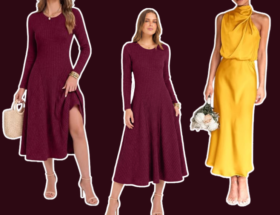

Personal color analysis is a method for identifying which colors naturally harmonize with your unique skin, hair, and eyes, so the clothes and makeup you wear make you look more radiant, rather than tired or washed out. It works by evaluating four qualities of your natural coloring: temperature, value, chroma, and contrast. Once you understand these, shopping stops feeling like guesswork.
Why Some Colors Make You Glow, and Others Fall Flat
You’ve probably noticed it before you ever had a name for it.
You put on one top and someone says you look glowing, well-rested, like you just came back from vacation. You put on another top, maybe in a color you actually love, and someone asks if you’re feeling okay.
Nothing about your skin changed between outfits. The color did.
That’s the entire idea behind personal color analysis: certain colors harmonize with your natural coloring, an alignment rooted in the principle of color harmony, and others compete with it. This guide will walk you through what personal color analysis actually is, how it works, why it works, and how to start using it the next time you shop.
What Personal Color Analysis Actually Is
Personal color analysis is a framework for understanding which colors naturally complement your skin, hair, and eyes, based on your undertone and how much natural contrast exists between your features.
Undertone refers to the subtle warm, cool, or neutral hue beneath your skin’s surface. It’s different from your skin’s depth or shade, and it tends to stay fairly consistent whether you’re tanned or pale.
It isn’t about labeling colors as good or bad.
It isn’t about labeling colors as good or bad. It’s about recognizing that colors interact with your natural coloring the same way lighting interacts with a room: some tones make your features stand out in a soft, healthy way, while others create a slightly duller or more washed-out effect.
Think of it less like a rulebook and more like a set of reading glasses. The colors around you don’t change. Your ability to see clearly which ones work in your favor does.
Most systems group people into “seasons” (Spring, Summer, Autumn, and Winter) as shorthand for combinations of these qualities. You’ll come across this seasonal language constantly once you start exploring personal color, so it helps to understand where it comes from before you dive into your own season.
Who Is Personal Color Analysis For?
Personal color analysis works for every skin tone, hair color, and eye color. It isn’t a system designed around one type of coloring with everyone else as an afterthought.
Fair skin can be warm or cool. Deep skin can be warm or cool. The same is true for every skin tone in between. What determines your season isn’t how light or dark your skin is on its own. It’s the relationship between your undertone, your overall depth, how muted or vivid your coloring appears, and how much contrast exists between your features.
This is part of why Colormaxxing combines Korean and Western approaches. Each system brings a slightly different lens to a wide range of coloring, and together they give a more complete picture than relying on just one.
The Four Dimensions Behind Every Season
Personal color analysis typically looks at four dimensions of your natural coloring: temperature, value, chroma, and contrast. Together, these determine which colors will harmonize with your features rather than overpower them.
Here’s what each one means in plain language.
Temperature: Warm or Cool
Temperature refers to whether your natural coloring leans warm (golden, peachy, olive undertones) or cool (pink, blue, rosy undertones).
Warm undertones often look healthiest in colors with golden, peachy, or earthy warmth, think camel, coral, or warm olive. Cool undertones typically shine in colors with a blue or pink base, like true red, icy blue, or soft berry.
This is usually the first thing people learn about their coloring, and it’s an important starting point. But temperature alone doesn’t tell the whole story, which is why undertone isn’t the only factor worth understanding.
Value: Light or Deep
Value describes how light or deep your overall coloring is: your skin, hair, and eyes together, not just one feature in isolation.
Someone with light hair, fair skin, and light eyes generally has a lighter overall value, and tends to look most balanced in colors that are similarly light and soft. Someone with deep hair, richer skin tones, and deep eyes has a deeper overall value, and often looks most radiant in colors with more depth and richness, like a deep burgundy instead of a pale blush.
Chroma: Soft or Vibrant
Chroma refers to how clear or muted your coloring appears.
Some people have naturally soft, muted coloring, think gentle, blended tones rather than sharp contrast. Others have naturally clear, vibrant coloring, where colors appear more saturated and defined. Someone with softer, more muted natural coloring often looks most harmonious in dusty, blended shades like sage or muted rose, while someone with clearer, more vibrant coloring tends to come alive in richer, more saturated colors like emerald or fuchsia.
Contrast: Low or High
Contrast measures the difference between your hair, skin, and eye color.
If your hair, skin, and eyes are relatively close in depth, you likely have low contrast, and you’ll usually look most balanced in outfits where the colors blend gently together. If there’s a noticeable difference (for example, very dark hair paired with fair skin), you likely have higher natural contrast, and can typically handle bolder color pairings, like a crisp white shirt with a deep black blazer, without it overwhelming your features.
Every seasonal palette is really just a specific combination of these four qualities. Once you understand them individually, the seasonal language starts to make a lot more sense.
As you read back through these four qualities, notice which ones already sound familiar. Maybe gold jewelry has always looked better on you than silver, or you naturally reach for soft, blended colors over bold, saturated ones without really knowing why. That’s often your coloring showing you the way before you have the vocabulary for it.
Korean vs. Western Personal Color Analysis: What’s the Difference?
You’ll likely come across two different approaches as you research personal color analysis: Korean Personal Color Analysis and Western Seasonal Color Analysis. Both are grounded in the same core idea, that certain colors harmonize with your natural coloring, but they developed independently and emphasize slightly different things.
Western Seasonal Color Analysis traditionally uses the four-season framework (Spring, Summer, Autumn, Winter), often expanded into twelve sub-seasons for more precision. Korean Personal Color Analysis places heavy emphasis on undertone and skin harmony, and is known for its accessible, visual approach to helping people recognize their own coloring.
Neither approach is more “correct” than the other. At Colormaxxing, we combine the strengths of both, because together they give a more complete, more practical picture than either system alone.
If you want the full breakdown of how these two methodologies compare, and how Colormaxxing blends them, our guide to Korean Personal Color Analysis vs. Western Seasonal Color Analysis covers it in depth.
The 12 Seasons: A Quick Overview
Most modern personal color systems expand the four seasons into twelve more specific sub-seasons, each representing a distinct combination of temperature, value, chroma, and contrast.
| Season Family | Two Sub-Seasons Might Share | But Differ In |
|---|---|---|
| Spring | Warmth and brightness | Light Spring is softer and lighter than Bright Spring |
| Summer | Cool undertones | Soft Summer is more muted than Cool Summer |
| Autumn | Warmth and richness | Soft Autumn is more muted than Deep Autumn |
| Winter | Cool undertones and contrast | Bright Winter is more vivid than Deep Winter |
This is why two people who both identify as “warm” can still look completely different in the same shade of orange. One might be a Warm Spring, who glows in it, while the other is a Warm Autumn, who looks better in a deeper, earthier version of that same warmth.
It’s also common to assume you’re an Autumn simply because your undertone runs warm, only to discover, once value and chroma are factored in, that you’re actually a Warm Spring, sharing the same warmth but wearing it in a lighter, brighter way.
We cover the full twelve-season system, including how to recognize which one fits you, in our guide to what the 12 seasons in personal color analysis really are.
Why the Four-Season System Still Holds Up
The twelve seasons tend to get most of the attention, but the original four-season system holds up entirely on its own. It’s been the foundation of color analysis for over 40 years because it genuinely works: even before you ever land on a specific subtype, knowing you’re broadly warm-and-light versus cool-and-deep already narrows down your best neutrals, your most flattering white, and the one jacket color you’ll reach for again and again.
Most people don’t fit perfectly into just one of four boxes, though. That’s why each season splits into three subtypes, twelve in total, that capture smaller shifts in depth, clarity, and contrast. You might share Spring’s warmth overall but lean brighter, which points you toward Bright Spring, or lighter, which points you toward Light Spring.
We’ll walk through all twelve in future guides in the future, one at a time. This is just the map showing how they connect.
Spring
- Light Spring
- Warm Spring
- Bright Spring
Summer
- Light Summer
- Cool Summer
- Soft Summer
Autumn
- Soft Autumn
- Warm Autumn
- Deep Autumn
Winter
- Bright Winter
- Cool Winter
- Deep Winter
Why It Works
Colors don’t exist in isolation. They exist next to your skin, your hair, and your eyes, and the human eye is remarkably sensitive to contrast and harmony.
When a color’s temperature, value, and chroma align with your natural coloring, it creates a sense of visual harmony: your features appear to come forward, your skin looks more even, and your eyes appear brighter. When a color works against your natural coloring, it can create the opposite effect: shadows appear more pronounced, skin can look duller, and the color itself becomes the focal point instead of you.
This is the same principle interior designers use when choosing wall colors to complement natural light, or photographers use when selecting backdrops that won’t clash with a subject’s skin tone. Personal color analysis simply applies that same logic to the colors closest to your face.
How to Apply This in Real Life
Understanding the theory is useful, but the real value of personal color analysis shows up the next time you’re getting dressed or standing in a makeup aisle.
- Shopping. Instead of trying on dozens of tops to see what “feels right,” you can scan a rack and immediately narrow your choices to colors more likely to harmonize with your coloring. This alone tends to save both time and money.
- Makeup. Foundation, blush, and lipstick all interact with your undertone the same way clothing does. Someone with cool undertones often finds that blue-based reds look more natural than orange-based ones, while someone with warm undertones usually finds the opposite.
- Hair color. If you’ve ever left the salon feeling like a color “just doesn’t look like you,” temperature and contrast are often the reason. Hair color that aligns with your natural coloring tends to look more intentional and less jarring against your skin.
- Everyday outfits. Once you know your general direction, building outfits becomes far more intuitive. You start reaching for combinations that naturally work together, rather than assembling pieces that technically match but somehow still feel off.
You don’t need to overhaul your closet to benefit from this. Most people start by simply noticing which of their existing pieces already feel effortless, and building outward from there.
- Accessories. Gold and silver interact with temperature the same way clothing does. Warmer undertones tend to look most polished in gold or rose gold, while cooler undertones often find silver or white gold more harmonious. Neutrals follow the same logic: a warm ivory reads very differently against your skin than a stark, cool white, even though both are technically “neutral.”
- Weddings, interviews, and photos. These are the moments people notice color the most, because there’s no room to just “wing it.” Knowing your general direction ahead of time means one less decision to stress over when it actually matters.
Common Myths About Personal Color Analysis
- “It means I can only wear certain colors.” Personal color analysis isn’t about restriction. It highlights which colors are most likely to harmonize with your natural coloring; it doesn’t eliminate the rest of the color wheel. Plenty of people wear colors outside their palette every day and love how they feel in them.
- “My undertone is the only thing that matters.” Undertone is an important piece of the puzzle, but value, chroma, and contrast all play a role too. Two people with the same warm undertone can still belong to completely different seasons.
- “Tanning changes my season.” A tan can shift your skin’s surface color temporarily, but your underlying undertone, the thing personal color analysis is actually measuring, tends to stay fairly consistent.
- “This is just a TikTok trend.” Seasonal color theory has roots that go back decades, and Korean Personal Color Analysis has been a mainstream part of beauty culture in Korea for years, reflecting a well-documented cultural trend. Its recent popularity online doesn’t make the underlying idea any less grounded; it just means more people are finally hearing about it.
- “I have to throw out everything that doesn’t match my season.” Nothing about learning your season requires replacing your wardrobe. Most people find that a meaningful portion of what they already own fits comfortably within their palette, and the rest simply becomes useful information for future purchases.
- “Only certain skin tones or ethnicities benefit from this.” Personal color analysis is built around undertone, depth, chroma, and contrast, qualities present in every skin tone. It was never designed around one narrow type of coloring.
Key Takeaways
- Personal color analysis identifies colors that harmonize with your natural skin, hair, and eye coloring.
- It’s built on four qualities: temperature, value, chroma, and contrast.
- Korean and Western approaches developed independently but share the same core idea.
- The twelve seasons are simply specific combinations of those four qualities.
- Knowing your direction makes shopping, makeup, and hair color decisions noticeably easier.
- It’s a guide for discovery, not a rulebook — you’re never limited to one narrow set of colors.
Frequently Asked Questions
It’s grounded in real principles of color theory and visual perception: how colors interact with contrast and undertone is well understood in fields like design and photography. Personal color analysis applies those same principles to individual coloring, though it functions as a helpful guide rather than an exact science.
Not necessarily. While a professional or AI-powered analysis can offer more precision, understanding the four core dimensions on your own can already make a noticeable difference in how you shop.
Your underlying coloring is generally stable, so your season typically doesn’t change. Some naturally occurring shifts, like hair graying, can eventually change how certain colors interact with your overall coloring.
Yes. Personal color analysis applies just as much to clothing, hair color, and accessories as it does to makeup.
Neither is more accurate than the other; they simply emphasize different aspects of the same underlying idea. Many people find the most value in understanding both.
Yes. Skin tone is only one factor. Two people with similar skin can still have different hair depth, eye color, or contrast levels, which can place them in entirely different seasons.
Yes. Temperature, value, chroma, and contrast are present in everyone’s coloring, regardless of gender. The same principles apply to shirts, suits, and grooming choices.
Yes. Temperature, value, chroma, and contrast are present in everyone’s coloring, regardless of gender. The same principles apply to shirts, suits, and grooming choices.
Where to Go From Here
Understanding the fundamentals is the first step. From here, most people want to know how these four qualities actually get evaluated in practice, or which of the twelve seasons best describes their own coloring.
If you’re curious how Korean and Western methods each approach this differently, Korean Personal Color Analysis vs. Western Seasonal Color Analysis is the natural next read. If you’re ready to start narrowing down your own season, What Are the 12 Seasons in Personal Color Analysis? breaks each one down in detail.
And whenever you’re ready to see where you personally land, our free Personal Color Analysis, powered by AI, can help you identify your season using nothing more than a few photos.