
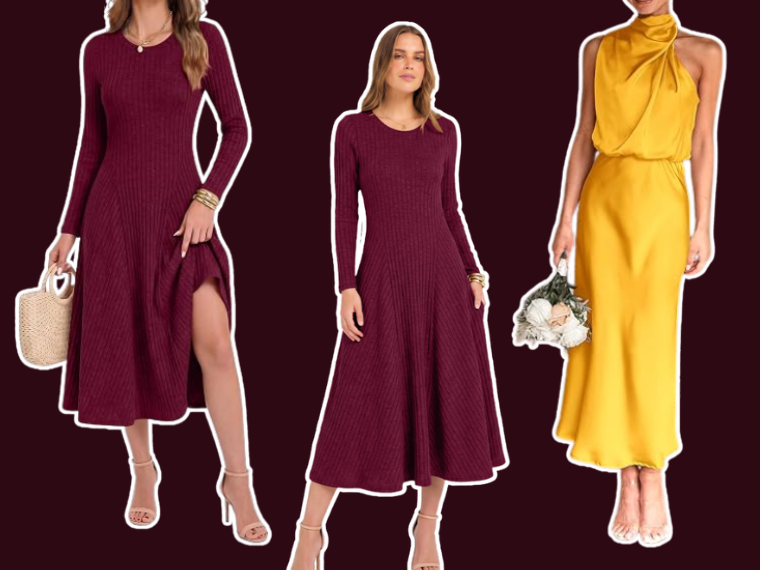
Deep Autumn and Warm Autumn are both part of the Autumn color family, and both are unmistakably warm, but they diverge on depth and clarity. If you’ve narrowed your coloring down to one of these two but aren’t sure which, this comparison breaks down exactly where they overlap and where they part ways.
Quick Answer
Deep Autumn is the deepest and most saturated of the three Autumn types, richly dark and dramatic. Warm Autumn is the most purely golden and clear of the three, grounded but lighter and more distinctly gold. Both are warm, but Deep Autumn leans into depth while Warm Autumn leans into golden clarity.
Deep Autumn vs Warm Autumn at a Glance
| Dimension | Deep Autumn | Warm Autumn |
|---|---|---|
| Temperature | Warm | Warm (most purely golden) |
| Value | Deep | Medium |
| Chroma | Rich, saturated | Warm, fairly clear |
| Contrast | Medium to high | Low to medium |
| Signature colors | Espresso, deep rust, mahogany red | Pumpkin, golden mustard, amber |
Where They Overlap
Both sub-seasons share Autumn’s defining warmth, an undertone rooted in gold, red, and earth rather than blue or pink. Both look best in similarly warm neutrals like camel and chocolate brown rather than stark black or cool grey, and both can wear rich, earthy colors that would look flat on a cooler season. If you’re warm-toned and drawn to grounded, autumnal colors, you’re very likely one of these two, or their softer sibling, Soft Autumn.
Both types also share gold as their strongest metal. Neither one typically looks as harmonious in silver or white gold as they do in warm, textured gold or bronze, so jewelry preference alone won’t help you tell them apart.
Where They Differ
The clearest distinction is depth. Deep Autumn sits at the darkest end of the Autumn spectrum, its palette includes near-black neutrals and richly saturated jewel-adjacent colors that read as dramatic. Warm Autumn stays in a lighter-to-medium range and prioritizes golden clarity over darkness, its palette is bright and sunlit rather than shadowed.
A simple way to picture it: Warm Autumn is a clear, golden pumpkin. Deep Autumn is the same undertone pushed into a dark, rich espresso. Same temperature family, very different depth.
Styling Differences
In practice, this difference in depth changes how each type approaches an outfit. Deep Autumn can build an entire look around darker, richer tones, deep rust head to toe, for example, without it reading as flat, because the depth of the clothing matches the depth of their natural coloring. Warm Autumn tends to need more warmth and light in a look overall, an all-dark outfit can sit at odds with their naturally lighter, golden coloring, while a mix of camel, pumpkin, and warm ivory feels more balanced.
A Quick Self-Test
Hold a golden mustard and a deep espresso brown near your face in natural light. If the mustard feels like the more natural, harmonious match and the espresso feels slightly heavy or overwhelming, Warm Autumn is likely the better fit. If the reverse is true, and the espresso feels grounding while the mustard feels slightly flat or washed out against your natural depth, Deep Autumn is likely closer.
Makeup Differences
- Deep Autumn can carry deeper, more saturated lip and eye colors, like mahogany or deep bronze, without them overwhelming the face.
- Warm Autumn tends to look most natural in golden, mid-toned shades, like terracotta or warm amber, since heavier, darker colors can outweigh its lighter natural depth.
Which One Is More Common?
Neither is inherently more common than the other, both appear across a full range of skin tones, since the difference is about depth and saturation in your overall coloring pattern, not skin depth alone. Someone with fair skin can be a Deep Autumn if their hair and eyes carry enough depth and contrast, and someone with deeper skin can be a Warm Autumn if their overall coloring stays golden and clear rather than dark and dramatic.
Common Mistakes When Choosing Between the Two
- Assuming skin depth alone decides it. Depth of skin tone is one clue, but hair, eyes, and overall contrast matter just as much as skin alone.
- Picking based on which sounds more flattering. “Deep” and “warm” are simply descriptive labels for a pattern, not a ranking, both types look equally striking when dressed correctly.
- Testing only one or two colors. A single fabric swatch rarely settles it, comparing several pieces from each palette side by side gives a much clearer picture.
Frequently Asked Questions
It’s common to feel close to both, since they share the same warm undertone. The four-dimension framework of temperature, value, chroma, and contrast can help pin down which one is the closer overall match.
Neither is inherently easier, but Warm Autumn’s palette overlaps more with mainstream “warm” fashion advice, while Deep Autumn often requires seeking out richer, darker pieces that aren’t always the default in stores.
Mostly, but Deep Autumn can wear a soft, warm black that would look slightly too heavy on Warm Autumn, which tends to look better in chocolate brown or warm charcoal instead.
Deep Autumn tends to read as more dramatic due to its depth, while Warm Autumn reads as vibrant and sunlit due to its clarity, both can be bold in their own way.
Where to Go From Here
For the full palette, neutrals, and styling direction for each type, see our dedicated guides to Deep Autumn and Warm Autumn, or explore the whole family in our Autumn Color Palette Guide.
If you’d like a definitive answer rather than a guess, our free Personal Color Analysis, powered by AI, identifies your exact temperature, value, chroma, and contrast pattern in minutes.