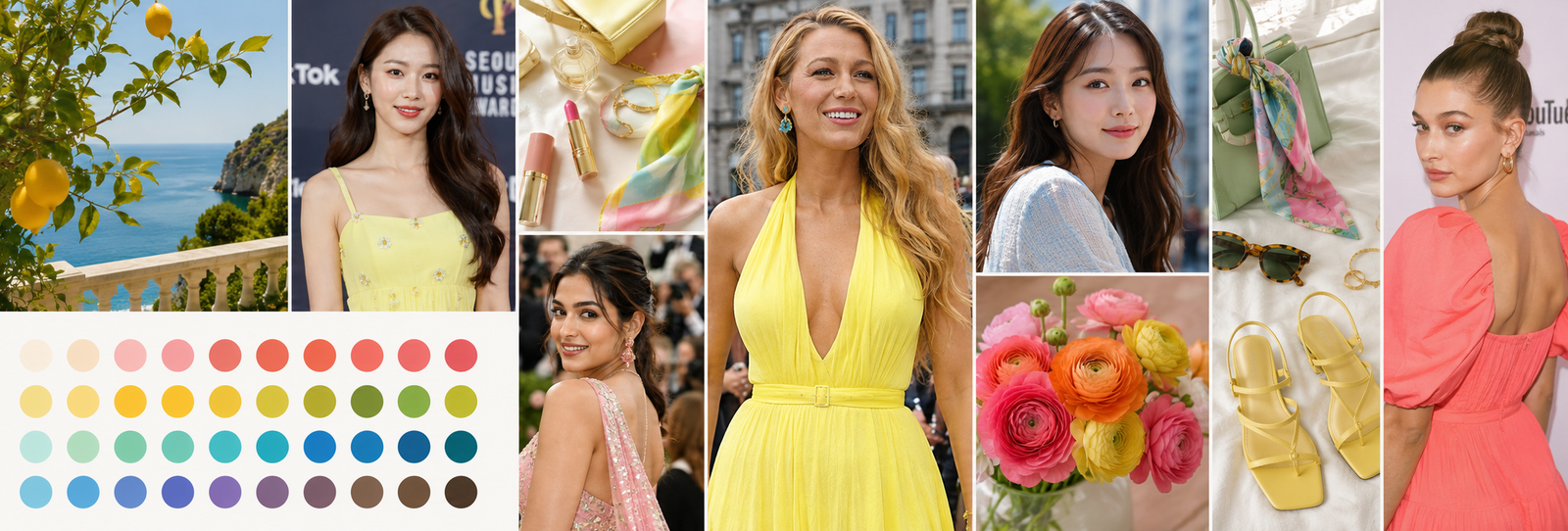
Bright Spring is the most vivid and high-contrast of the three Spring sub-seasons, warm, clear, and bold, sitting just beside Bright Winter on the color wheel while staying warm rather than cool. If your coloring reads as warm but strikingly vivid and well-defined, rather than soft or gently golden, Bright Spring, part of the broader Spring color family, is likely your closest fit.
What Makes Bright Spring Distinct
Bright Spring shares Spring’s core warmth, but its defining trait is intensity. Where Light Spring leans soft and Warm Spring leans golden, Bright Spring leans vivid and high-contrast, the boldest and most saturated of the three Spring types.
- Temperature: Warm, though the coolest-leaning warmth of the three Spring types.
- Value: Light to medium, similar range to Warm Spring.
- Chroma: High clarity, the most saturated and vivid of the three Spring sub-seasons.
- Contrast: High, a defining feature that sets Bright Spring apart from the other two.
The Bright Spring Color Palette
Every color in this palette shares the same quality: warm, clear, and vividly saturated.
- True warm red
- Vivid coral
- Bright turquoise
- Clear grass green
- Vivid golden yellow
- Hot pink-coral
Bright Spring Neutrals
Neutrals for Bright Spring can carry more contrast than the other two Spring types without losing harmony:
- Bright white (clearer than Light Spring’s soft ivory)
- True navy
- Medium warm grey
- Black, used sparingly as an accent rather than a full base
How Bright Spring Differs From Light Spring and Warm Spring
All three Spring types share warmth. Bright Spring is set apart by chroma and contrast, it’s the most saturated and the most high-contrast of the three, closer in intensity to Winter than Light Spring or Warm Spring are, while still carrying unmistakable warmth. Comparing a soft peach (Light Spring) against a golden coral (Warm Spring) and a vivid, saturated coral (Bright Spring) side by side usually makes the distinction clear.
How to Know If You’re a Bright Spring
Common signals include warm skin with noticeable clarity, hair and eyes that create real contrast against the skin (rather than blending softly), and eye colors that often appear vivid or flecked, bright green, clear blue, or golden hazel with visible depth. The overall impression is striking and well-defined rather than soft or gently blended.
If your coloring feels vivid and high-contrast but leans cool rather than warm, Bright Winter, not Bright Spring, is likely the closer fit, temperature is what ultimately separates the two.
Bright Spring Makeup Direction
- Base: warm-toned foundation with a clear, fresh finish, avoid overly matte or heavy formulas that mute natural vibrancy.
- Blush: vivid coral or warm pink for a bright, energized flush.
- Lips: true red, vivid coral, or bright warm pink.
- Eyes: can handle more definition than the other Spring types, clear turquoise liner or vivid golden shadow reads as harmonious rather than overdone.
Bright Spring Hair Direction
Warm hair tones with visible depth and shine tend to harmonize best: golden brown with dimension, warm copper, or clear golden blonde. Flat, ashy, or overly muted hair color can undersell Bright Spring’s naturally vivid contrast.
Practical Application
- Don’t shy away from saturation. Bright Spring is one of the few seasons genuinely enhanced by bold, vivid color used generously.
- Use contrast deliberately. Pairing a bright top with a crisp neutral tends to look more intentional than an all-soft, blended outfit.
- Choose clear, warm gold jewelry with a bit of shine or polish, it echoes Bright Spring’s natural clarity better than brushed or matte finishes.
Common Mistakes
- Choosing muted or dusty colors. They can read as flat against Bright Spring’s naturally vivid coloring.
- Avoiding contrast entirely. An all-tonal, softly blended outfit can undersell Bright Spring’s natural definition.
- Confusing vividness with coolness. Bright Spring is warm, cool jewel tones belong to Bright Winter instead.
Key Takeaways
- Bright Spring is the most vivid and high-contrast of the three Spring sub-seasons, while remaining warm.
- Best colors include true warm red, vivid coral, bright turquoise, and clear golden yellow.
- Chroma and contrast separate Bright Spring from Light Spring and Warm Spring, not temperature.
- Bright Spring is genuinely enhanced by bold, saturated color and deliberate contrast, more than the other two Spring types.
Frequently Asked Questions
No. Both are vivid and high-contrast, but Bright Spring is warm and Bright Winter is cool. They sit near each other on the color wheel because of shared clarity, not shared temperature.
In small doses, yes, especially as an accent rather than head to toe. Bright Spring’s natural contrast can carry black more successfully than Light Spring or Warm Spring can.
That combination is less common but can happen near a seasonal boundary. Comparing yourself directly against Warm Spring and Light Spring’s palettes can help clarify which feels more consistently balanced.
Not when matched to the right person. What reads as overwhelming on a softer, more muted coloring often reads as simply harmonious and alive on genuine Bright Spring coloring.
Where to Go From Here
To see the full picture of how all three Spring types relate to one another, our Spring Color Palette Guide covers the whole family in one place.
And if you’d like direct confirmation of which Spring type fits you, our free Personal Color Analysis, powered by AI, identifies your specific pattern in minutes.