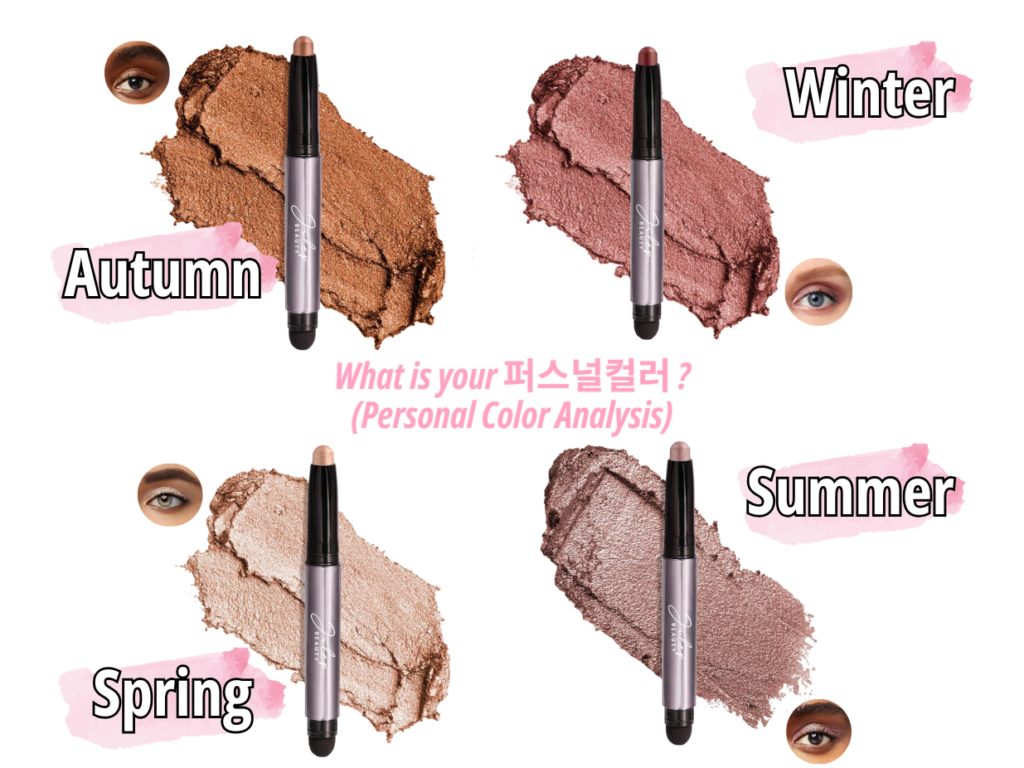
Korean personal color analysis is an approach to personal color that evaluates how colors affect facial harmony, skin clarity, and overall brightness, with a strong focus on everyday beauty application like makeup and skincare. It uses the same core dimensions as Western seasonal analysis, temperature, value, and clarity, but asks a slightly different central question: not just “what season are you,” but “which colors make your face look most vibrant, clear, and balanced.”
Where This Term Keeps Showing Up
If you spend any time in K-beauty content, you’ve probably run into it: a creator holding two lipstick shades up to their face, or a video titled “finding my personal color” with fabric swatches and dramatic before-and-afters.
It can look like a completely different system from the “Spring, Summer, Autumn, Winter” language you may have seen elsewhere. It isn’t, not entirely. It’s better understood as a different emphasis within the same underlying color theory.
What Korean Personal Color Analysis Actually Evaluates
Korean personal color analysis is built on the same foundation as Western seasonal analysis: temperature (warm versus cool), value (light versus deep), and chroma (clear versus muted). What sets the Korean approach apart is where the attention goes once those dimensions are identified.
Rather than stopping at “you’re a Warm Spring,” Korean analysis tends to ask a more specific follow-up question: which exact colors, held directly against your face, make your skin look clearer, brighter, and more even, and which ones make it look duller or more uneven. The season becomes a tool for answering that question, not the end point itself.
This is part of why Korean personal color analysis is so closely tied to makeup and skincare recommendations. If the whole point is facial clarity and brightness, foundation shade matching, blush undertone, and lip color become just as central as, say, choosing a coat color.
The Korean Color Analysis Philosophy
A suitable color, in this framework, tends to make the face appear more vibrant, clearer, healthier, and more balanced. An unsuitable color tends to create the opposite impression: dullness, unevenness, or a slightly tired look, even if the color itself is objectively “pretty.”
This is a genuinely useful reframe, because it shifts the question away from “is this a good color” (which invites judgment) toward “does this color create harmony with my face” (which doesn’t). Nothing about a challenging color is wrong. It simply isn’t doing the same flattering, clarifying work that a well-matched color does.
Warm and Cool, the Korean Way
Warm and cool coloring form the first major distinction in Korean personal color analysis, just as they do in the Western system.
Warm coloring tends to harmonize with yellow-based, golden, and earth-inspired shades: peach, coral, camel, olive, and warm beige. Cool coloring tends to harmonize with blue-based, icy, and clean shades: lavender, cool pink, sapphire, and blue-grey.
Where Korean analysis often goes further is in how immediately practical this distinction becomes. Warm versus cool isn’t just a wardrobe direction; it’s applied directly to foundation undertone, blush family, and lip color family, since those are the products closest to the face and the most visible signal of whether a color is working with or against your natural coloring.
Why This Approach Resonates So Widely
Korean personal color analysis has become genuinely popular well beyond Korea — popular enough that it has fueled a broader beauty tourism trend — and it’s worth understanding why, because the reason connects directly to what makes it useful.
It connects color theory to decisions people already make daily. Most people don’t buy a new coat every week, but many people do put on makeup, and Korean personal color analysis speaks directly to that everyday decision. It also tends to be highly visual and example-driven, built around direct before-and-after comparisons rather than abstract descriptions, which makes the underlying concept click faster for a lot of people.
How Colormaxxing Uses This Approach
Colormaxxing combines Korean personal color analysis with Western seasonal analysis rather than choosing one over the other, because they’re genuinely complementary. Western seasonal analysis offers a well-established structure, the twelve seasons, for organizing your overall coloring. Korean personal color analysis offers a sharper lens for translating that structure into daily beauty decisions: which foundation, which blush, which lip color actually creates that clearer, more balanced look.
Neither approach is more “correct” than the other. Our guide to Korean Personal Color Analysis vs. Western Seasonal Color Analysis walks through exactly where the two overlap and where they diverge.
Practical Application
- Foundation and base makeup. Matching undertone (warm or cool) as closely as possible tends to create the clearest, most even-looking base, which is the starting point Korean analysis emphasizes most.
- Blush and lip color. Testing shades directly against your skin, rather than judging them in the packaging or on someone else, follows the Korean approach’s core method: does this color create visible clarity and brightness on your specific face.
- Skincare and complexion products. The same “does this create harmony” question applies to tinted skincare, bronzer, and highlighter, not just color cosmetics.
- Everyday styling. The warm/cool distinction still applies to clothing, particularly for pieces worn close to the face, like scarves, collars, and earrings, where the color-to-skin interaction is most visible.
Common Misconceptions
- “Korean personal color analysis is a completely separate system from seasonal color analysis.” It shares the same core dimensions; the difference is mainly in emphasis and application, not in the underlying theory.
- “It only applies to Korean beauty products.” The principles apply to any brand or product; they’re about color and skin interaction, not manufacturer.
- “It’s stricter than Western analysis.” Neither system is inherently stricter. Both describe harmony rather than rules, and both frame less-harmonious colors as simply less flattering, not forbidden.
Key Takeaways
- Korean personal color analysis uses the same core dimensions (temperature, value, chroma) as Western seasonal analysis, with a stronger focus on facial harmony and everyday beauty application.
- The central question is whether a color makes your face look clearer, brighter, and more balanced, rather than dull or uneven.
- It’s especially practical for makeup and skincare decisions, since those products sit closest to the face.
- Colormaxxing combines this approach with Western seasonal analysis rather than choosing between them.
Frequently Asked Questions
Neither is more accurate. They share the same underlying dimensions and emphasize different, complementary applications.
No. The principles apply to any product from any brand; what matters is the color and how it interacts with your specific coloring.
Yes. You can apply the warm/cool and clarity/brightness principles directly to makeup testing without first identifying a specific season.
It developed as part of Korea’s broader beauty culture, which places strong emphasis on skin clarity and complexion harmony. Our guide to How Korean Beauty Culture Uses Personal Color Analysis covers this history in more depth.
Where to Go From Here
To see exactly how this approach compares to the Western seasonal system, point by point, our guide to Korean Personal Color Analysis vs. Western Seasonal Color Analysis is the natural next read.
And if you’d like to see both approaches applied to your own coloring, our free Personal Color Analysis, powered by AI, draws on principles from both systems.